EN
EN




- Overview
- Specifications
- Description
- Applications
- Competitive Advantage
- FAQ
- Recommended Products
Overview
Place of Origin: |
Sweden |
Brand Name: |
ABB |
Model Number: |
DSQC363 |
Packaging Details: |
Original new Factory Sealed |
Delivery Time: |
5-7 days |
Payment Terms: |
T/T |
Supply Ability: |
In stock |
Specifications
|
Model: |
DSQC363 |
|
Type: |
Robot Computer |
|
Dimensions: |
2 x 24.9 x 24.4 cm |
|
Weight: |
0.32 kg |
|
Compatibility: |
IRC5 controller (early versions), IRB 1410/2600/4600/6700 series |
|
System Support: |
RobotWare early versions (not compatible with RW 3.2+, cold start may cause Flash overflow) |
|
Processor: |
32-bit industrial RISC, real-time computation |
|
Memory: |
Integrated Flash and RAM (program storage & real-time data caching) |
|
Bus Interface: |
IRC5 internal high-speed backplane bus (connects axis control, I/O, communication modules) |
|
Communication Ports: |
Built-in serial and Ethernet (supports teach pendant, PC, PLC) |
|
Power Supply: |
24 VDC (internal, with overvoltage/reverse protection) |
|
Mounting: |
Slot mount in IRC5 controller main cabinet |
|
Protection Class: |
IP20 (for control cabinet use) |
|
Operating Temperature: |
0°C to +55°C |
|
Storage Temperature: |
-40°C to +85°C |
|
Humidity: |
5% to 95% (non-condensing) |
Description
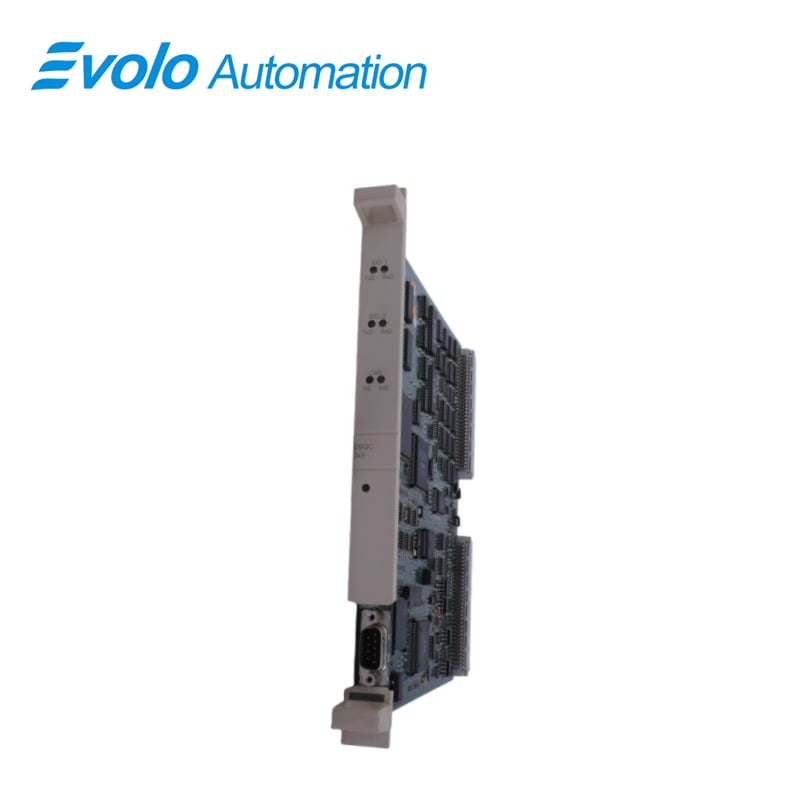
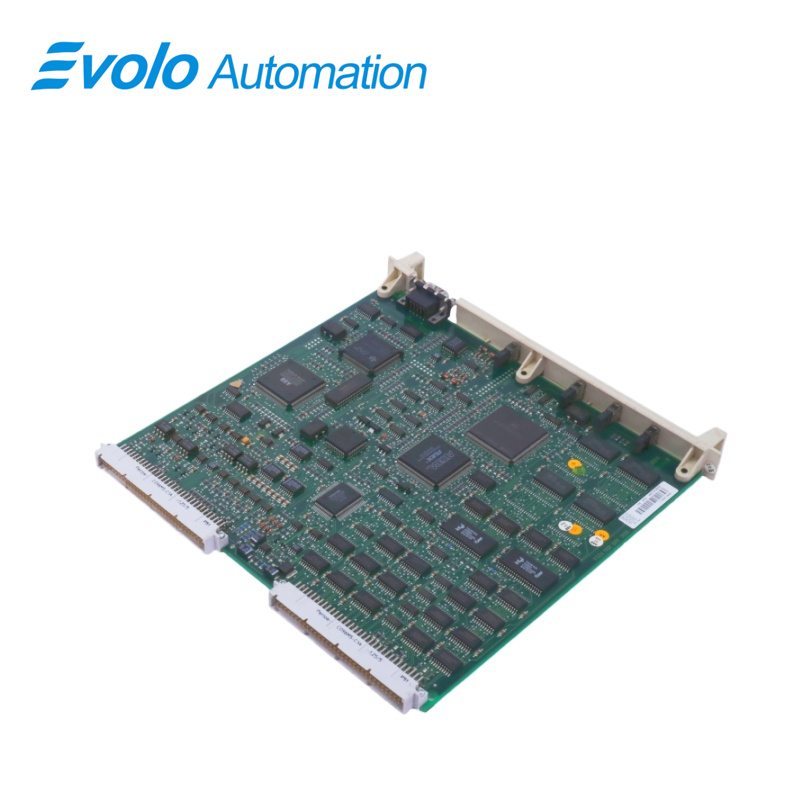
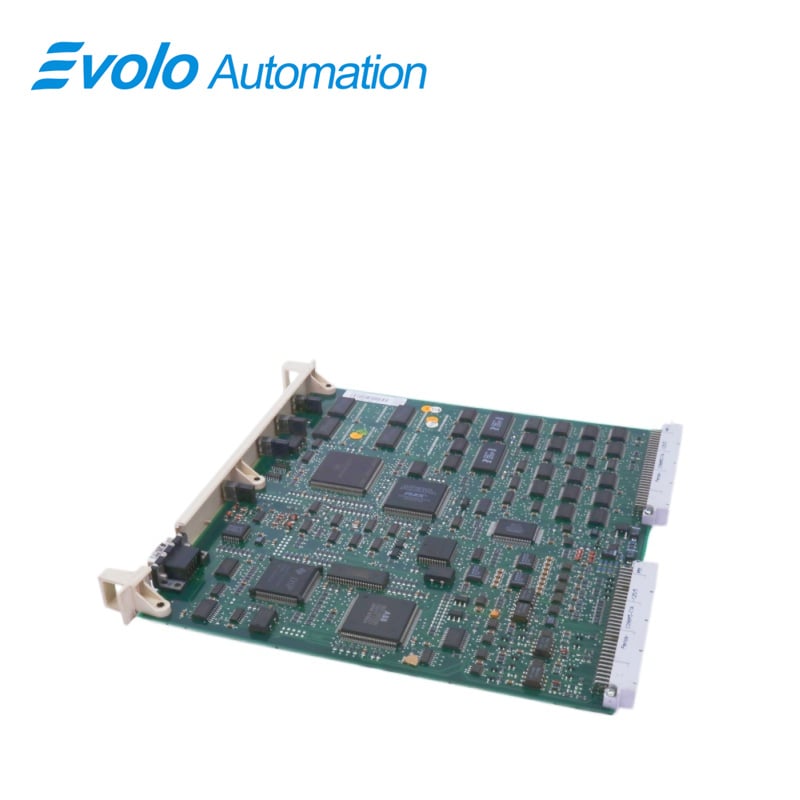
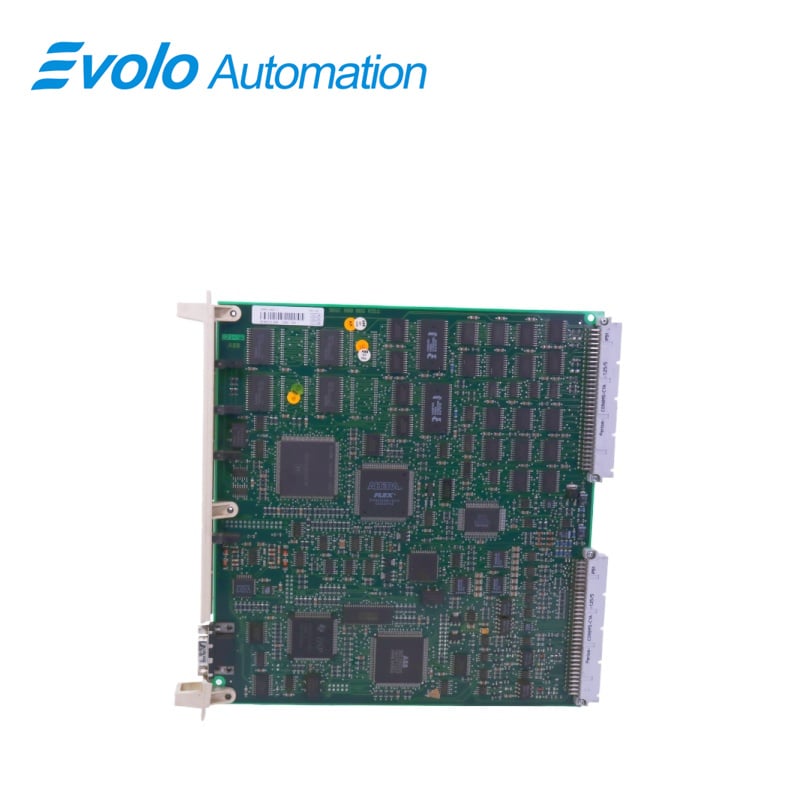
The DSQC363 is the Robot Computer, responsible for motion planning, logic operations, data processing, and bus scheduling in the robot system. It is the "brain" of the IRC5 controller and is compatible with early IRC5 single-cabinet/dual-cabinet systems. The DSQC363 (Robot Computer) is NOT supported in RW3.2. If cold-booting with RW3.2, there will be an overflow in the robot computer's flash memory, and a special tool from the supplier is required to recover the flash. Ensure that a DSQC 373 (Robot Computer) is installed in the Robot Controller before starting to boot with RW3.2.
Applications
Automotive manufacturing plants: Controlling the precision of robotic arms in long-cycle, high-intensity operations such as spot welding, gluing, and material handling.
Electronics cleanrooms: Used for picking up and assembling semiconductors or precision electronic components, requiring extremely high repeatability and positioning accuracy.
Heavy-duty foundries: Managing the auxiliary movements of large die-casting robots in harsh environments (such as high temperatures or high vibrations).
Food processing plants: Achieving smooth trajectory tracking in high-speed palletizing or packaging processes in conjunction with conveyor belt systems.
Metal stamping plants: Controlling the logic synchronization between the loading robot and the stamping press to ensure production safety and efficiency.
Competitive Advantage
Core System Operations: Performs robot kinematics calculations, trajectory interpolation, and multi-axis cooperative control, ensuring motion accuracy and real-time performance.
Program Execution: Runs the RobotWare system and user robot programs, handling logic instructions, I/O control, and fault diagnosis.
Bus Scheduling: Manages the internal backplane bus, coordinating data interaction between axis control modules (e.g., DSQC354), communication modules (e.g., DSQC352), and I/O modules (e.g., DSQC346).
Fault Diagnosis: Monitors system status in real time, reporting CPU anomalies, bus faults, memory errors, etc., supporting rapid problem localization.
Peripheral Device Management: Drives teach pendants, control panels, external sensors, and actuators, enabling human-machine interaction and external device linkage.
FAQ
Q: What are the differences between the DSQC363 and DSQC354?
A: The DSQC354 is typically used as an encoder interface card for signal conversion, while the DSQC363 is a core axis control board responsible for motion path calculation and generating control commands.
Q: Why can't my controller recognize the DSQC363 module?
A: This is usually caused by poor contact at the backplane interface or incorrect slot configuration. Power off the system and check the hardware list in the S4C+ configuration parameters.
Q: Can the DSQC363 operate stably in high-temperature environments above 50°C?
A: The DSQC363 has a maximum operating temperature of 50°C. If the ambient temperature exceeds this, ensure the robot cabinet cooling system or fan is working properly to avoid thermal shutdown.
Q: What precautions should be taken when repairing the DSQC363?
A: Due to sensitive CMOS components on the DSQC363, proper electrostatic discharge (ESD) protection is required. Repairs should be performed on an anti-static workstation.