EN
EN




- Overview
- Specifications
- Description
- Applications
- Troubleshooting
- FAQ
- Recommended Products
Overview
Place of Origin: |
Sweden |
Brand Name: |
ABB |
Model Number: |
DSQC332 |
Packaging Details: |
Original new Factory Sealed |
Delivery Time: |
5-7 days |
Payment Terms: |
T/T |
Supply Ability: |
In stock |
Specifications
|
Model: |
DSQC332 |
|
Type: |
Digital Relay I/O Unit |
|
Dimensions: |
20.3 x 6 x 19.5 cm |
|
Weight: |
0.7 kg |
|
Digital Inputs: |
16 (2 groups of 8, galvanically isolated) |
|
Digital Outputs: |
16 relay outputs (NO, individually isolated) |
|
Input Rated Voltage: |
24 VDC |
|
Input Voltage Range ("1"): |
15 to 35 VDC |
|
Input Voltage Range ("0"): |
-35 to 5 VDC |
|
Output Rated Voltage: |
24 VDC |
|
Max Output Current: |
2 A per channel |
|
Supply Voltage: |
24 VDC |
|
Supply Source: |
24 V I/O or external supply |
|
SW Connections: |
Polled |
|
SW Connections: |
Change-Of-State |
|
SW Connections: |
Change-Of-State with acknowledge suppression |
|
SW Connections: |
Cyclic |
|
SW Connections: |
Cyclic with acknowledge suppression |
Description
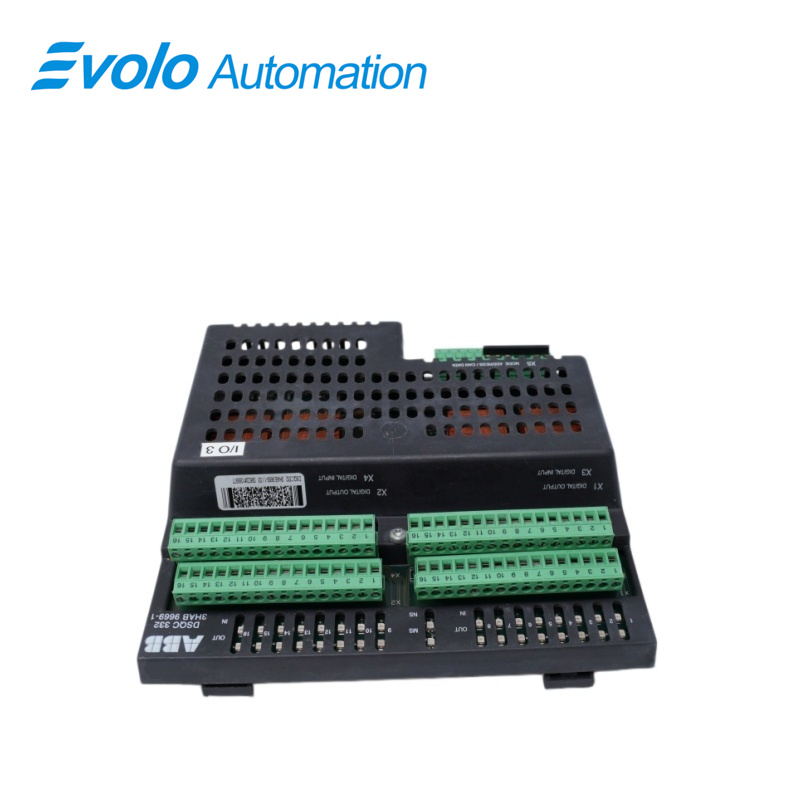
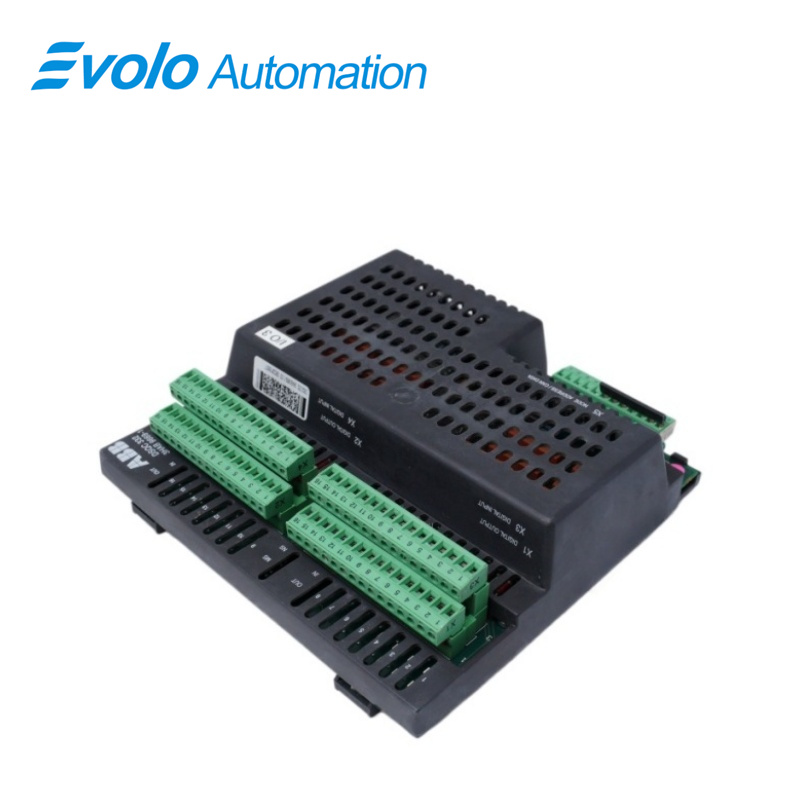
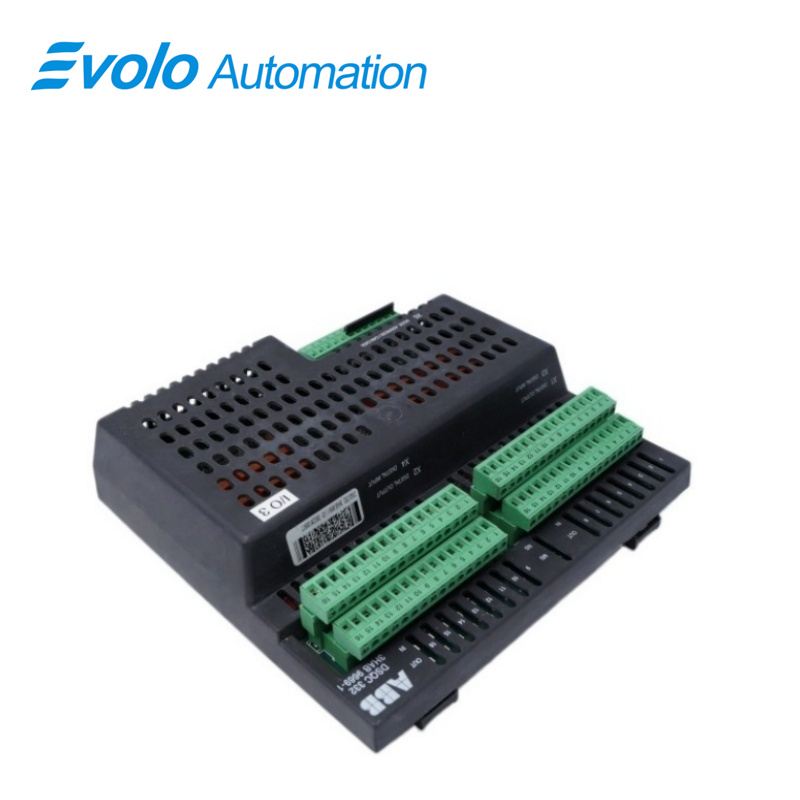
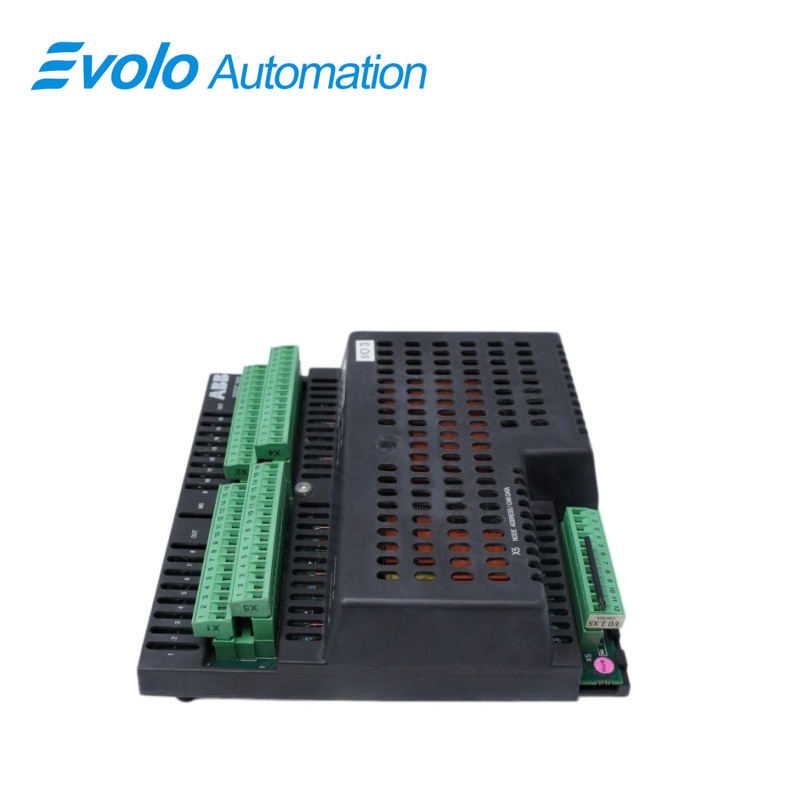
The DSQC332 is a Digital Relay I/O Unit normally mounted inside the control module. As an option, it may also be mounted in an external I/O module. The unit handles input and output signals between the robot system and any external systems through relay outputs and digital inputs.
Applications
Automotive manufacturing plants: Used for signal feedback to control welding clamps, fixture movements, and gripping systems.
Metal processing plants: Used as intermediate relays to isolate control signals in CNC machine tool loading, unloading, grinding, and polishing units.
Logistics and packaging plants: Used for interlocking signal exchange between palletizing robots and conveyor belts.
Electronics assembly plants: Used for sensor integration and actuator control of small robotic arms.
Troubleshooting
Relay Contact Sticking/Failure: Caused by frequent switching of high-current loads. Check the output load current and install an intermediate relay if necessary.
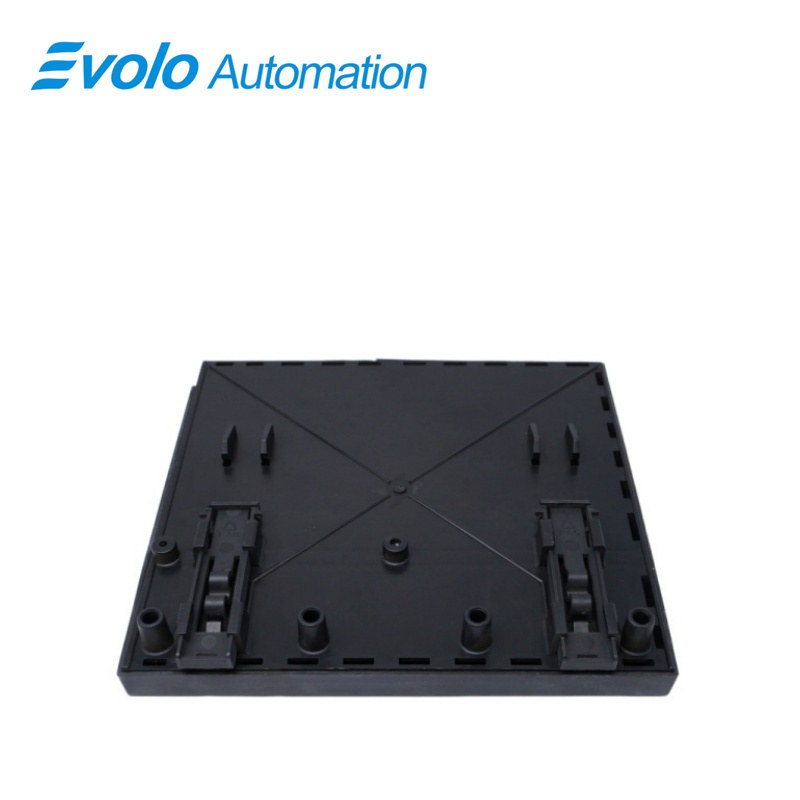
I/O Communication Interruption: Check if the bus cable connected to the module is loose, or check the DIP switch address settings on the back of the module.
No 24V Output/Input: Usually caused by a blown external power supply fuse or a broken power cord.
LED Status Light Error: Observe the indicator lights on the module panel. Flashing usually indicates a configuration error or a hardware self-test failure.
FAQ
Q: Can the DSQC332 directly drive high-power AC motors?
A: No. Although the DSQC332 has relay outputs, its contact capacity is limited. It is typically used to drive external contactor coils or intermediate relays.
Q: Do I need to rewrite the program after replacing the DSQC332?
A: No. As long as the hardware address (DIP switch) settings of the DSQC332 are consistent with the previous module, the robot system will automatically recognize it.
Q: How do I determine if an input channel of the DSQC332 is damaged?
A: Monitor the I/O status on the robot teach pendant. Manually trigger a signal at the input terminal of the DSQC332. If the indicator LED is on but the teach pendant does not respond, the channel may be faulty.
Q: Is the DSQC332 compatible with the IRC5 controller?
A: The DSQC332 is mainly designed for the S4 series. ABB IRC5 Robot Controller systems typically use newer I/O modules such as DSQC652, so compatibility must be verified before replacement.
Q: Why is the output signal delay of the DSQC332 relatively high?
A: Check the bus load and scan cycle settings in the teach pendant, and also consider the inherent mechanical switching time of the relay, which is usually a few milliseconds.