EN
EN




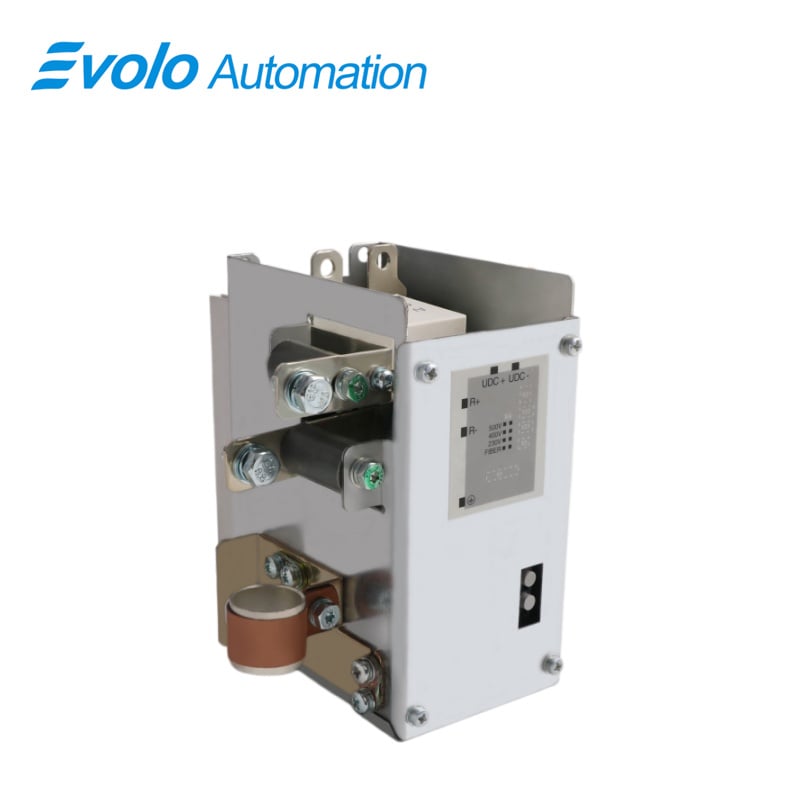
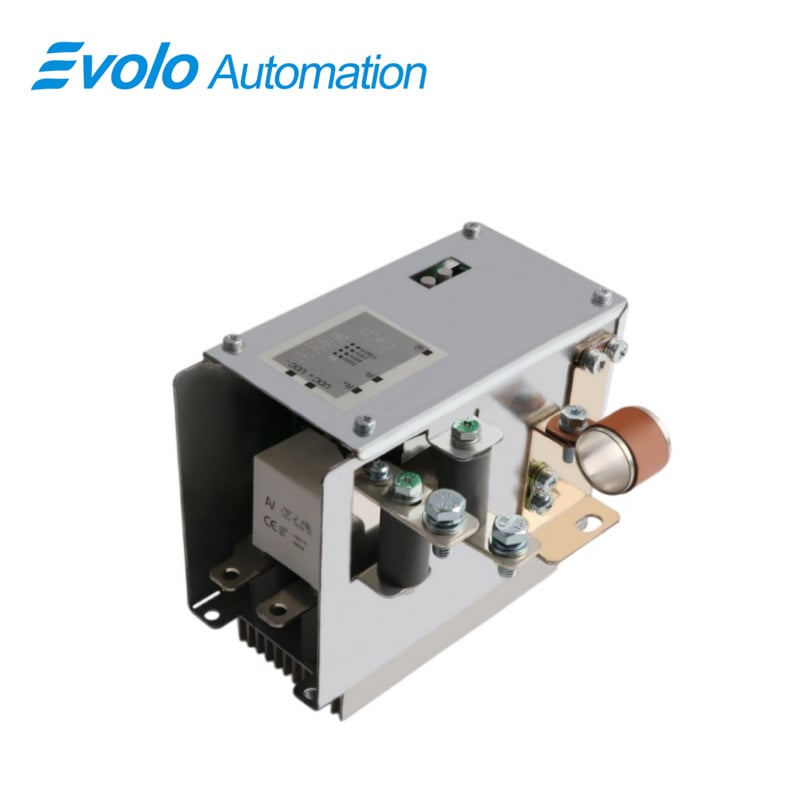
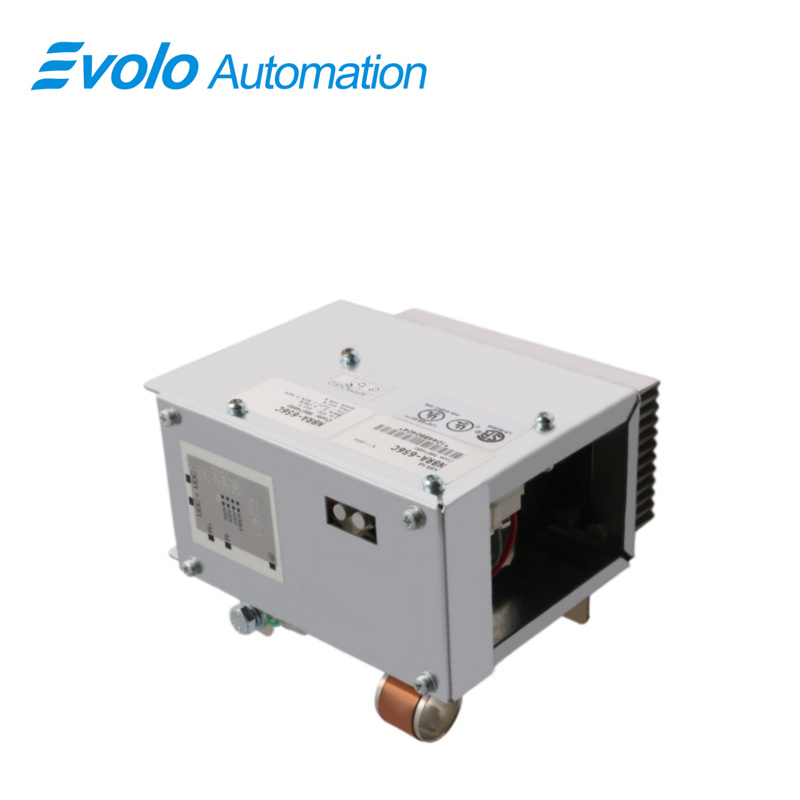
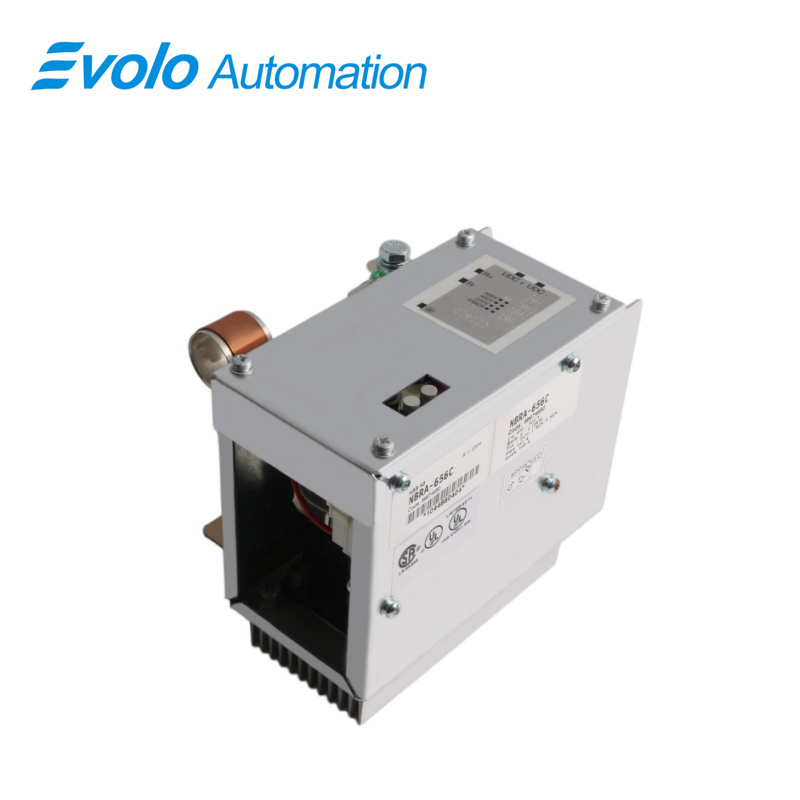
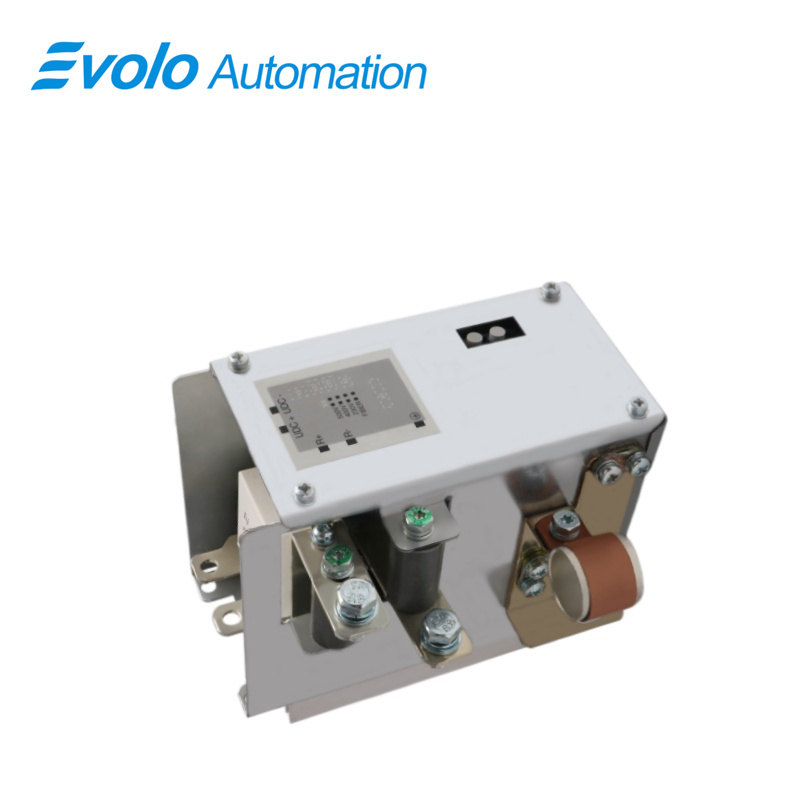
- Overview
- Specifications
- Description
- Applications
- Mounting
- Fault Indications
- Competitive Advantage
- FAQ
- Recommended Products
Overview
Place of Origin: |
Sweden |
Brand Name: |
ABB |
Model Number: |
NBRA-656C |
Packaging Details: |
Original new Factory Sealed |
Delivery Time: |
5-7 days |
Payment Terms: |
T/T |
Supply Ability: |
In stock |
Specifications
|
Product Name: |
Braking Chopper |
|
Model: |
NBRA-656C |
|
Dimensions: |
14.5 x 15.5 x 17.5 cm |
|
Weight: |
2.16 kg |
|
WEEE Category: |
Product Not in WEEE Scope |
|
Braking Resistor: |
6.0 ohm |
|
Energy Capacity: |
2400 kJ |
|
Resistor Power: |
6 kW |
|
Number of Elements: |
12 |
|
Cable Specification: |
3 x 35 + 16 mm² (Copper) |
|
Braking Power: |
65.6 kW |
Description
The NBRA-656C Braking Choppers are optional devices for ACS 600 Family frequency converters. The chopper connects the braking resistor to the intermediate circuit of the frequency converter whenever the voltage in the intermediate circuit exceeds the maximum limit. The maximum limit is equal to 1.21 · 1.35 · U1max. U1max is dependent on the chopper voltage selection (see Chapter 3 – Voltage Selection and Mechanical Installation). With the selection 400V, U1max is 415 V; with the selection 500V, U1max is 500 V; with the selection >500V (NBRA-66x), U1max is 690V. Energy consumption by resistor losses lowers the voltage until the resistor can be disconnected. This limit is equal to 1.19 · 1.35 · U1max. The energy generated by the motor during a fast deceleration of the drive typically causes the voltage to rise in the intermediate circuit.
Applications
Logistics and warehousing plants: conveyor systems, parcel handling, sorting centers.
Heavy machinery plants: cranes, winches, lifts.
Processing and manufacturing plants: machine tools, bending machines, looms, and engine test benches.
Energy and power plants: such as voltage stabilization management in wind turbine frequency converters.
Mounting
Ensure that the chopper voltage level is set correctly.
Check the intended installation site for sufficient room. Mark the locations for the four holes.
Make holes in the four positions.
Make sure the dust from drilling does not enter the unit you are installing or other equipment at the installation site.
Insert screws in the holes. Use plugs if necessary.
Lift the chopper onto the screws on the wall.
Tighten the screws.
Fault Indications
A fault in the resistor braking circuit prevents fast motor deceleration. It can also cause the frequency converter to trip under fault. If a fault is detected by the chopper control board (NBRC) the braking chopper disconnects the braking resistor from the intermediate circuit and the changeover switch of the relay output is released. The relay output indicates following faults:
• braking resistor or resistor cable short circuit,
• braking chopper (IGBT) short circuit,
• chopper control board failure,
• the chopper enable input signal switched off.
Note that the chopper will not be able to switch off a short circuit current.
Competitive Advantage
High Power Compatibility: Short-time power up to 88.4kW, meeting the needs of high inertia and frequent braking conditions.
Wide Voltage Compatibility: Automatically adapts to 230V/400V/500V systems, offering strong versatility.
High Efficiency and Stability: Precise IGBT chopping rapidly dissipates regenerative energy, preventing inverter overvoltage tripping.
Flexible Expansion: Supports parallel expansion, adapting to larger power loads.
Easy Integration: Only requires connection to the DC bus and braking resistor; parameters are adjustable, and installation is simple.
FAQ
Q: Can the NBRA-656C be used with non-ABB brand frequency converters?
A: Yes. Although it is optimized for ACS600/ACS800, as a general-purpose chopper, it can be used with any brand of frequency converter as long as it can be connected to the DC bus (DC+/DC-) and the installation location is appropriate.
Q: Why is my chopper NBRA-656C not working, but the frequency converter is overshooting?
A: Please check the internal voltage selection jumper. If the power supply is 400V but the chopper is mistakenly set to 500V, it will fail to start braking due to excessive trigger voltage.
Q: Can I connect two NBRA-656Cs in parallel to obtain higher power?
A: Yes. Parallel operation is supported through master-follower connection to meet higher power braking requirements.
Q: How do I choose a suitable braking resistor?
A: The resistance value must be no less than 4 Ω (400V) or 6 Ω (500V), and the rated power of the resistor must be able to withstand the heat dissipation during braking.
Q: Are there any special requirements for the installation of the braking resistor of NBRA-656C?
A: The resistor should be installed horizontally away from choppers and flammable materials, as its surface temperature is extremely high during operation, which may cause fire or burns.