EN
EN




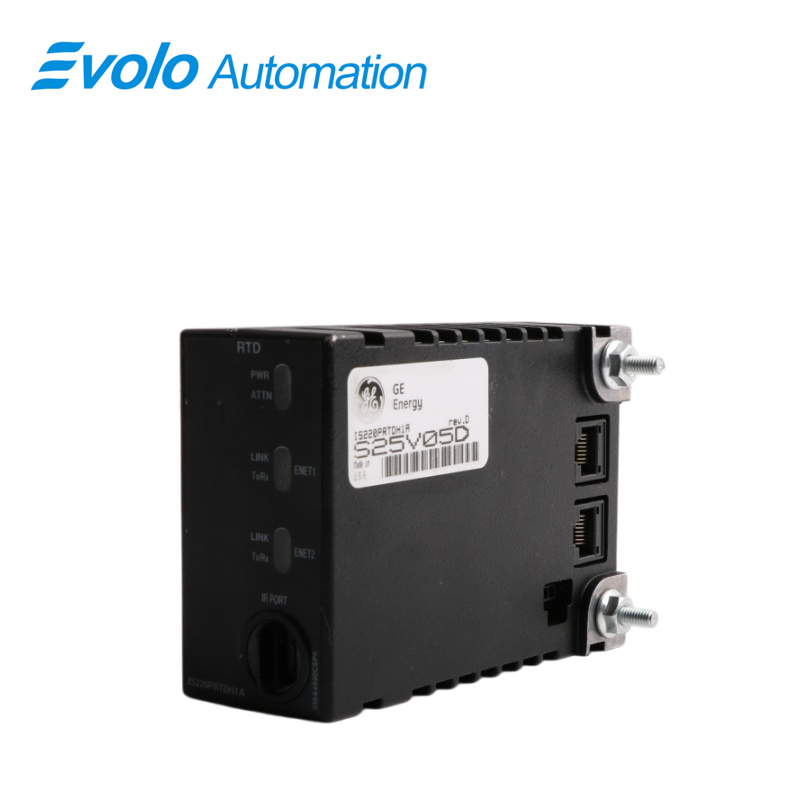
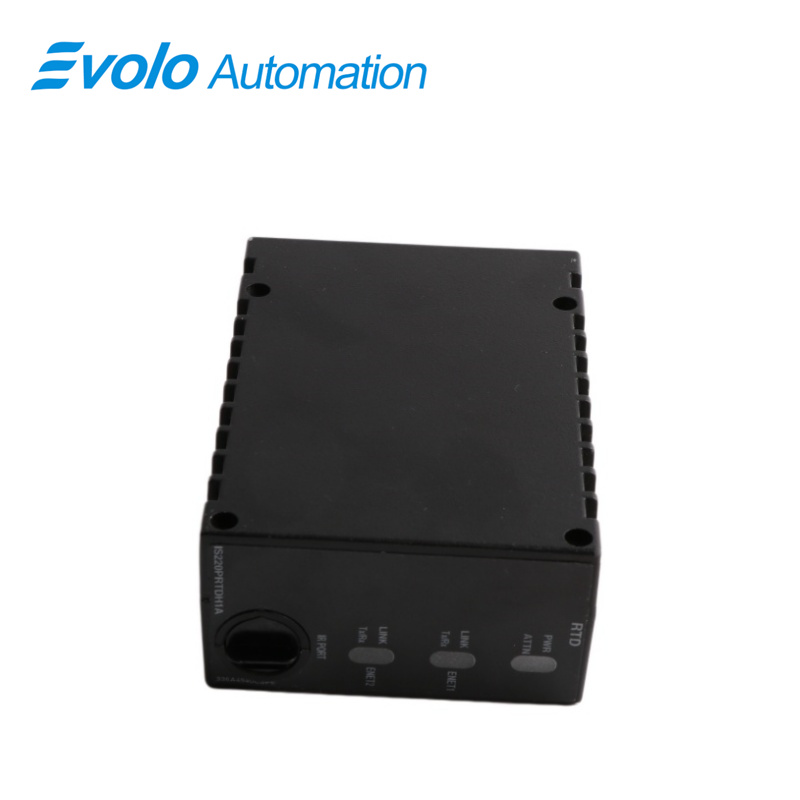
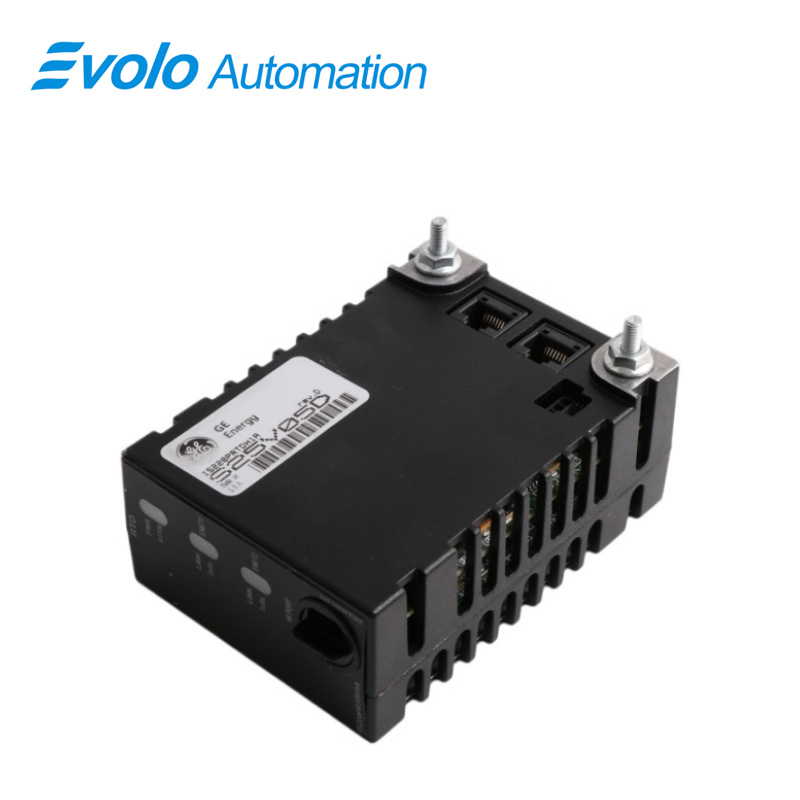
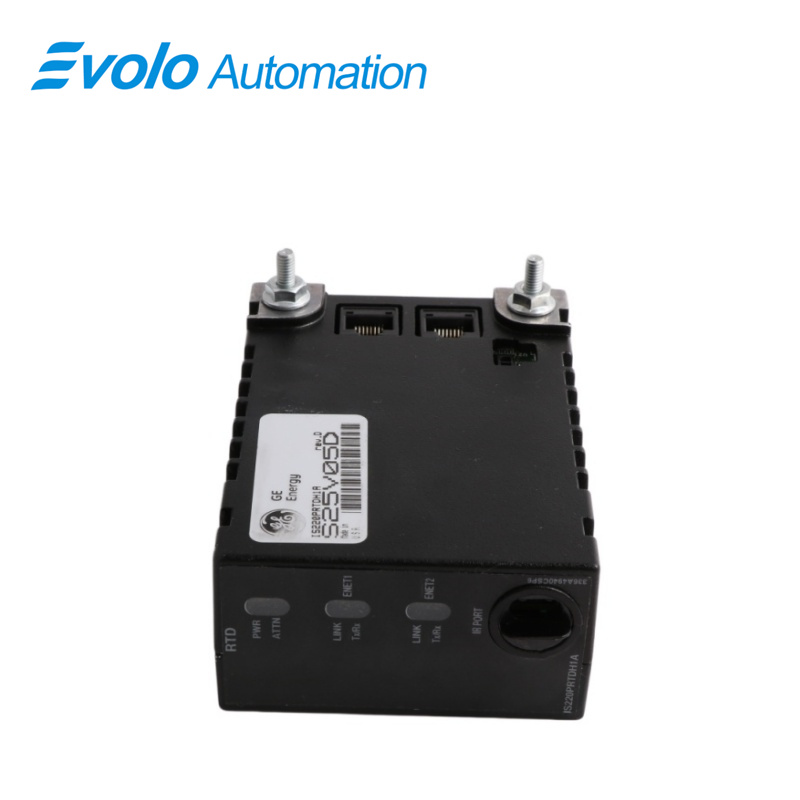
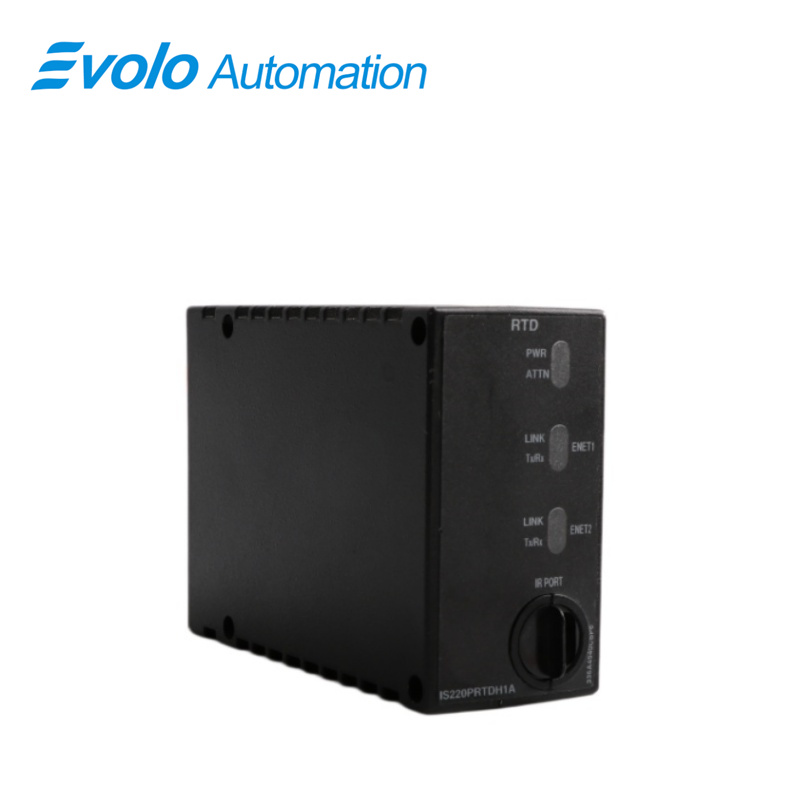
IS220PRTDH1AD IS220PRTDH1A Resistance Temperature Device Input Module
Email: [email protected]
whatsApp: +86-18150117685
- Overview
- Specifications
- Description
- Applications
- Compatibility
- Installation
- Diagnostics
- FREQUENTLY ASKED QUESTIONS
- Recommended Products
Overview
Place of Origin: |
USA |
Brand Name: |
GE |
Model Number: |
IS220PRTDH1AD IS220PRTDH1A |
Packaging Details: |
Original new Factory Sealed |
Delivery Time: |
5-7 days |
Payment Terms: |
T/T |
Supply Ability: |
In stock |
Specifications
|
Part Number: |
IS220PRTDH1AD IS220PRTDH1A |
|
Manufacturer: |
General Electric |
|
Series: |
Mark Vle |
|
Product Type: |
Resistance Temperature Device Input Module |
|
Number of Channels: |
8 |
|
A/D Converter Resolution: |
14-bit |
|
Common Mode Voltage Range: |
±5 V |
|
Maximum Lead Resistance: |
15 Ω |
|
Dimensions: |
13 x 8.2 x 6 cm |
|
Weight: |
0.36 kg |
|
Country/Region of Manufacture: |
United States |
Description
IS220PRTDH1AD IS220PRTDH1A is a Resistance Temperature Device Input Module manufactured and designed by General Electric as part of the Mark Vle Series used in distributed control systems.An RTD input terminal board and one or more I/O Ethernet networks are connected electrically by the Resistance Temperature Device (RTD) Input (PRTD) pack.An acquisition board dedicated to the thermocouple input function is included in the pack, along with a processor board that is shared by all Mark Vle distributed I/O packs.Up to eight RTD inputs can be supported by the I/O pack, while the TRTD terminal boards can support up to sixteen RTD inputs.A DC-37 pin connector that links directly to the terminal board connector for the pack, as well as a three-pin power input, are used for input.There are two RJ45 Ethernet connectors for the output.Indicator LEDs are used to display visual diagnostics.
Applications
Heavy-duty gas/steam turbine power plants:
Specific applications: Monitoring turbine bearing temperature, exhaust temperature, and generator stator winding temperature.
Oil and chemical plants:
Specific applications: Monitoring cylinder and lubricating oil temperatures in large reciprocating compressors to prevent mechanical damage due to overheating.
Wind power plants:
Specific applications: Integrated into the nacelle control system to monitor gearbox oil temperature and generator bearing temperature.
Large metallurgical and steel plants:
Specific applications: Thermal protection systems for critical equipment such as blast furnace blowers.
Compatibility
The RTD input terminal boards TRTDH1D, H2D, and SRTD board are all compatible with PRTDH1A, but the DIN-rail mounted DRTD board is not. The compatibility information is provided in the table below
1 One l/O pack and one or two network connections are used in simplex.
2 Two l/O packs with one or two network connections are used by Dual.
3 Three l/O packs with one network connection each are used by TMR
The TRD input circuit is galvanically isolated by the PRTD.This necessitates modifications to the TRTDH1D and TRTDH2D boards' terminal board transient protection.The board's H1D version offers filtering that is compatible with the PRTD standard scan rate.When the rapid scan rate of PRTD is chosen, the H2D version of the terminal board offers less filtering to enable proper performance.Although there won't be any physical harm, if PRTD is mounted on an earlier version of the TRTD board, an incompatibility will be detected.
Installation
1 Securely mount the desired terminal board
2 Directly connect one or two PRTDs to the connections on the terminal board (for simplex control of eight or 16 RTDs)
3 Utilizing the threaded inserts next to the Ethernet ports, mechanically secure the packs. The inserts attach to the terminal board type-specific mounting bracket. It is important to position the bracket such that the DC-37 pin connector between the terminal board and the pack is not subjected to a right angle force. Only one adjustment should be necessary during the lifespan of the product
4 Depending on the system configuration, connect one or two wires to ensure optimal operation across either port. It is customary to link ENET1 to the network connected to the R controller when dual connections are employed
5 Connect the connector on the side of the pack to provide electricity to the battery. The I/O pack includes a built-in soft-start feature that limits current inrush where power is applied, so it is not essential to unplug the cable before connecting it
6 To customize the I/O pack as appropriate, use the ToolboxST* application
Diagnostics
1 A power-up self-test that examines the hardware on the CPU board, Ethernet ports, RAM, and Flash memory
2 Constantly checking if the internal power supply is operating properly
3 Verifying that the hardware set matches by comparing the electronic ID data from the CPU, acquisition, and terminal boards, then checking that the application code loaded from flash memory is appropriate for the hardware set
4 Hardware limit checking for each RTD type is based on predetermined (non-configurable) high and low levels that are placed close to the working range's edges. The input is no longer examined once this limit is reached, and a logic signal is set instead
5 A composite diagnostic alarm, L3DIAG PRTD, referring to the entire board is generated if the hardware limits for any one of the eight inputs are reached. Information about each diagnosis is available from the toolbox. Individual diagnostic signals may be latched, and the RESET DIA signal may be used to reset them
6 System limit testing for each RTD input is done using customizable high and low levels. These restrictions, which can be adjusted for enable/disablement and latching/non-latching, can be utilized to trigger alarms. The out-of-limit signals are reset via RESET SYS
7 The toolbox offers information on each diagnosis in detail. The diagnostic signals can be individually latched and, if they become healthy, reset with the RESET DIA signal
FREQUENTLY ASKED QUESTIONS
Q: What is GE Mark Vle IS220PRTDH1A IS220PRTDH1AD?
A: IS220PRTDH1A IS220PRTDH1AD are Resistance Temperature Device (RTD) Input Modules developed by General Electric and used in distributed control systems.
Q: How to check price and availability for IS220PRTDH1A IS220PRTDH1AD?
A: Please Contact John for sales at +86-18150117685 or Request a Quote.
Q: What is the common mode voltage range for IS220PRTDH1A IS220PRTDH1AD?
A: The common mode voltage ranges from ±5 volts.
Q: What is the maximum lead resistance of IS220PRTDH1A IS220PRTDH1AD?
A: The maximum lead resistance is 15 Ohm (two-way cable resistance).
Q: What is the normal mode rejection of IS220PRTDH1A IS220PRTDH1AD?
A: Normal mode rejection of up to 250 mV rms is 60 dB at 50/60 Hz system frequency for normal scan.
Q: How are IS220PRTDH1A IS220PRTDH1AD boards packaged for shipment from you?
A: Parts are placed in antistatic packets and securely packed in ESD boxes cushioned with ESD foam designed to safeguard electrical components.