EN
EN




- Overview
- Quick Detail
- Description
- Applications
- FUNCTIONS
- FREQUENTLY ASKED QUESTIONS
- Recommended Products
Overview
Place of Origin: |
USA |
Brand Name: |
GE |
Model Number: |
DS200FCGDH1BBA |
Packaging Details: |
Original new Factory Sealed |
Delivery Time: |
5-7 days |
Payment Terms: |
T/T |
Supply Ability: |
In stock |
Quick Detail
|
Part Number: |
DS200FCGDH1BBA |
|
Manufacturer: |
General Electric |
|
Product Type: |
Gate Distribution and Status Card |
|
Function: |
DIN-rail mounting |
|
Series: |
Mark VI |
|
Number of Channels: |
12 |
|
Span: |
-8 mV to +45 mV |
|
Operating Temperature: |
-30 to 65 °C |
|
Power Supply Voltage: |
24 V DC |
|
Board Size: |
9.2 x 6.3 inch |
|
Weight: |
0.45 kg |
|
Country of Origin: |
USA |
|
System Clock: |
16-bit up-counter producing firing commands and timestamp feedback, resets at OFFFFH |
|
System Reset: |
Resets all board registers to starting settings during power-up or hardware reset |
|
System Heartbeat: |
Periodic signal indicating operational status, board-level heartbeat with IMOK green LED |
|
Firing Commands: |
Firing mask register for six-cell strings, controls fiber-optic transmitters, up to six simultaneous, writable via VME bus |
|
Voltage Feedback from NATO: |
20-pin ribbon input, includes 3 AC voltages, 5 attenuated DC signals, rescaled to 10 V range, test points Va, Vb, Vc, Vp, Vn |
|
Analog and Digital Conditioning: |
Voltage-controlled oscillators for VA, VB, VC, VDC, IA, IC, FLUXBAR, FLUXCBR signals; six parallel Sigma-Delta converters fed with voltage and current signals |
Description
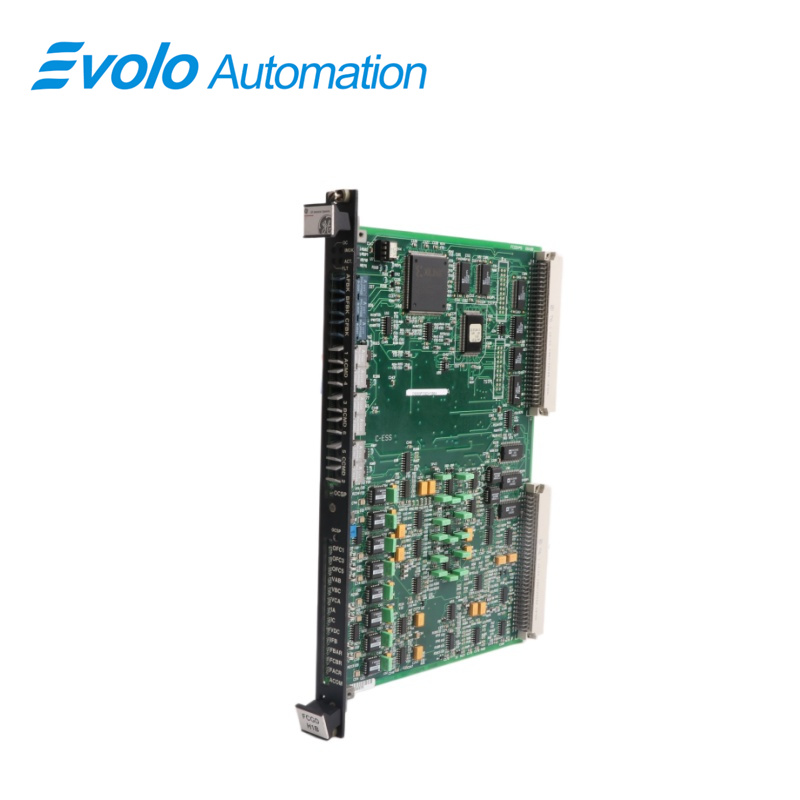
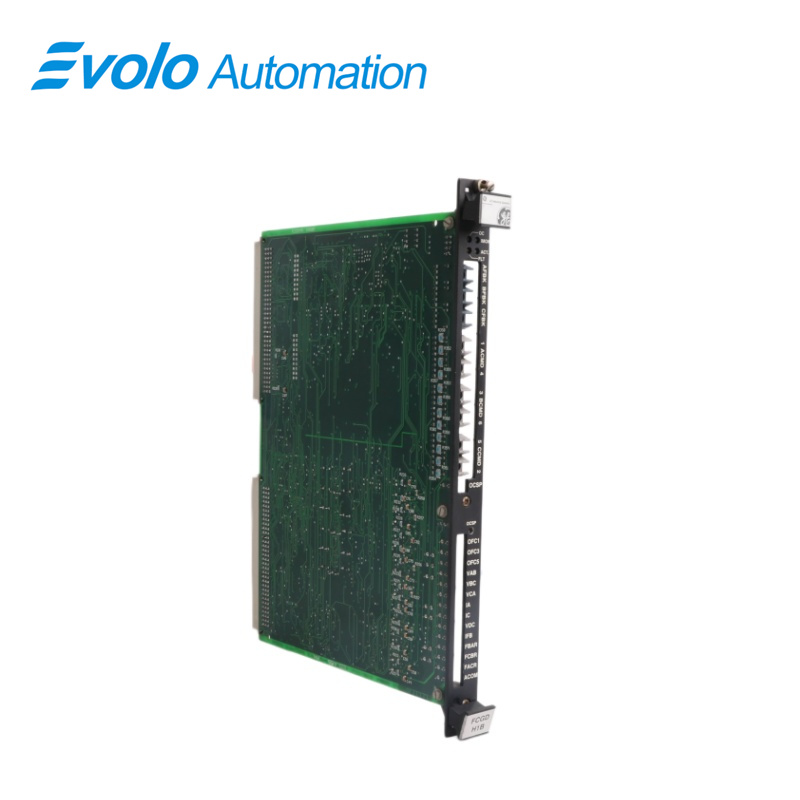
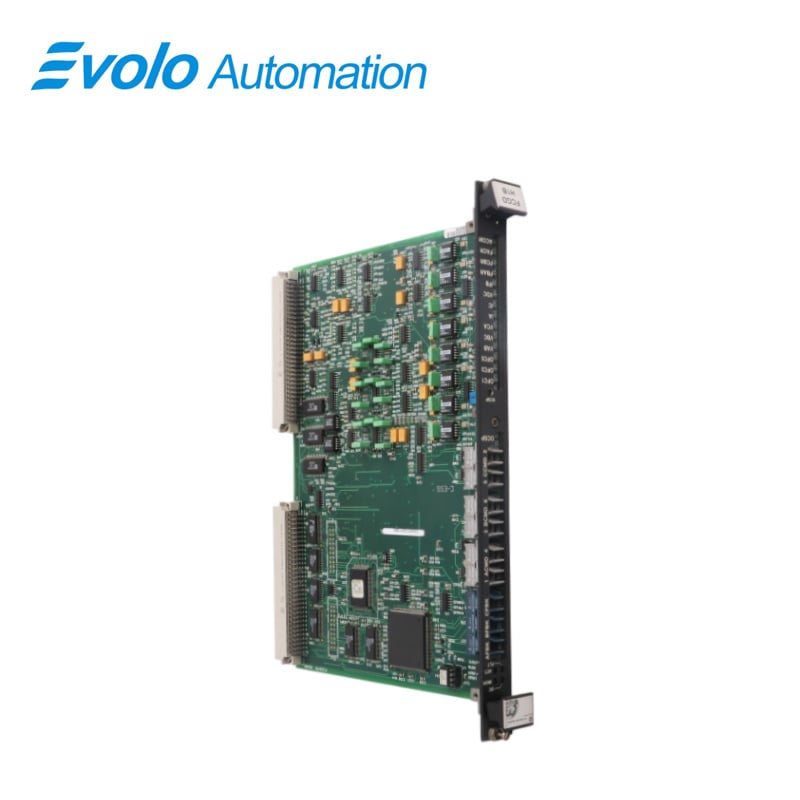
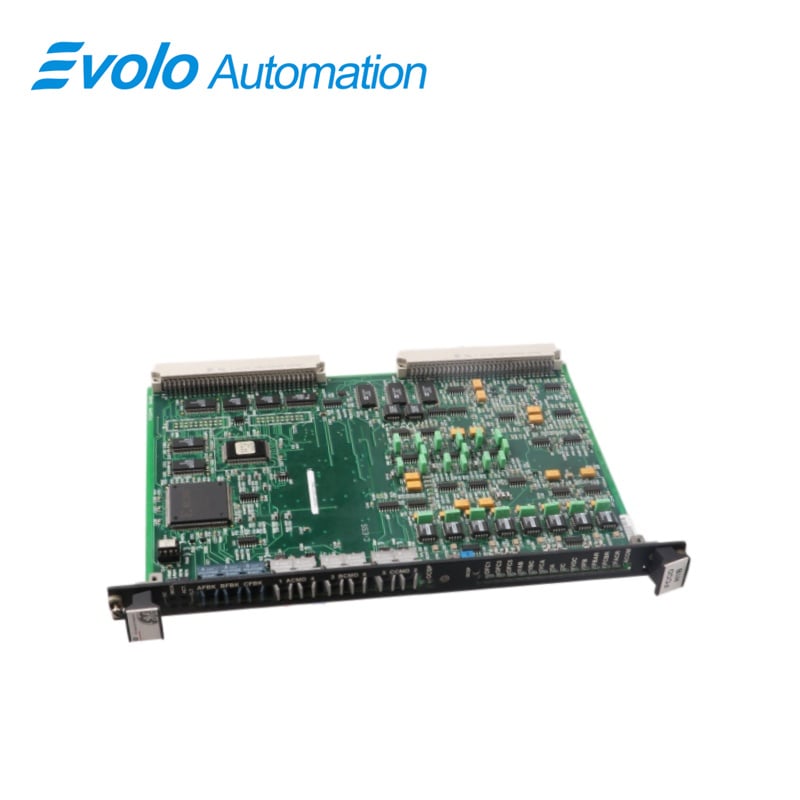
DS200FCGDH1BBA is a Gate Distribution and Status Card manufactured and designed by General Electric as part of the Mark VI Series used in GE Speedtronic Control Systems. An interface board for a 6-pulse phase-controlled, non-reversing bridge is called the Gate Distribution and Status Card (FCGD). Through the VME backplane, it transmits feedback and diagnostic data after receiving SCR firing data from the DS200DSPC (DSPC, the VME processor) chip. The FCGD receives a multiplexed cell status signal from each bridge leg and decodes and distributes the cell gating signals for each bridge leg. Additionally, it takes in bridge feedback signals, scales them, and then transmits the voltage, frequency, and current status data back to the DSPC board.
Applications
Power industry: Power plants, substations
Industrial automation: Drive control systems
FUNCTIONS
SYSTEM CLOCK: The FCGD features a system clock register that produces firing commands and timestamp feedback values.This 16-bit up-counter ends when it reaches the hexadecimal value OFFFFH and resets to 0.
SYSTEM RESET: During power-ups or hardware resets, the system reset signal sets all of the registers on the board to their starting settings.
SYSTEM HEARTBEAT: An electronic component's heartbeat serves as a periodic signal indicating that the component is still operational. This function is supported by the FCGD's system heartbeat register. The board-level heartbeat starts to count after the VME host CPU writes to it for the first time, and an IMOK-labeled green board-front LEDturns on
FIRING COMMANDs: A firing mask register with six entries that correspond to the six-cell strings in a bridge controls the fiber-optic firing signal transmitters. Up to six fiber-optic transmitters can be turned on simultaneously by the FCGD. The host CPU has the option to directly write data to the firing mask register across the VME bus connection.
VOLTAGE FEEDBACK FROM NATO: Over a 20-pin ribbon wire,the Voltage Feedback Scaling (NATO) board sends input signals to the FCGD(see Table 5).These signals include three ac voltages referred to ground through a local resistor, five attenuated analog voltage signals that correspond to plus and negative dc, and five attenuated analog voltage signals. To maintain the output signals inside the 10 V range of the signal electronics, the input range is rescaled using the jumpers on NATO.The VME backplane has test points for the Va, Vb, Vc, Vp, and Vn signals
ANALOG AND DIGITAL CONDITIONING: For analog voltage, current, and flux feedback, voltage-controlled oscillators are utilized.The VCOs are driven by the signals VA, VB,VC, VDC, IA,IC, FLUXBAR, and FLUXCBR(see Table 1). Additionally, six parallel Sigma-Delta converters that work with the VCOs are fed with the voltage and current signals
FREQUENTLY ASKED QUESTIONS
What is a DS200FCGDH1BBA Gate Distribution and Status Card?
A Gate Distribution and Status Card is a critical component used in control systems to manage and distribute signals or data between various components. It is commonly utilized in industrial environments, such as power plants, manufacturing units, and automated systems, where it plays an essential role in monitoring and controlling processes. These cards are designed to ensure efficient data flow and operational reliability.
What are the main functions of a DS200FCGDH1BBA Gate Distribution and Status Card?
The primary functions of a Gate Distribution and Status Card include signal distribution, status monitoring, error detection, and data synchronization. The card routes control signals to different subsystems within a system, monitors their operational status in real-time, detects and reports faults or irregularities, and ensures that data is consistent and synchronized between components. These capabilities are vital for maintaining the smooth and efficient operation of complex industrial systems.
Where is a DS200FCGDH1BBA Gate Distribution and Status Card typically used?
Gate Distribution and Status Cards are typically used in various industrial settings, such as power plants where they manage turbine control systems, manufacturing environments for process control, and robotics or motion control systems. These cards ensure reliable signal routing and status updates in automated environments, making them essential for maintaining operational efficiency and safety.