EN
EN




- Overview
- Specifications
- Description
- Environment and certification
- Applications
- Features and benefits
- FAQ
- Recommended Products
Overview
Place of Origin: |
Sweden |
Brand Name: |
ABB |
Model Number: |
TU831V1 3BSE013235R1 |
Packaging Details: |
Original new Factory Sealed |
Delivery Time: |
5-7 days |
Payment Terms: |
T/T |
Supply Ability: |
In stock |
Specifications
|
Parameter |
Value |
|
Type |
Extended |
|
Connection |
Terminal block |
|
Channels |
8 |
|
Voltage |
250 V |
|
Mounting |
Both directions |
|
Mounting detail |
55 ºC (131 °F) |
|
Use with I/O |
DI820, DI821, DO820, DO821 |
|
Process connections |
16, up to 8 I/O channels (2 terminals per channel) |
|
Single/redundant I/O |
Single |
|
Maximum current per I/O channel |
3 A |
|
Acceptable wire sizes |
Solid: 0.2 - 6 mm², Stranded: 0.2 - 4 mm², 24 - 10 AWG |
|
Recommended torque |
0.5 - 0.6 Nm |
|
Stripping length |
7 mm |
|
Dielectric test voltage |
2000 V a.c. |
|
Dimensions (L×W×H) |
12.7 × 11.6 × 6.6 cm |
|
Weight |
0.2 kg |
Description
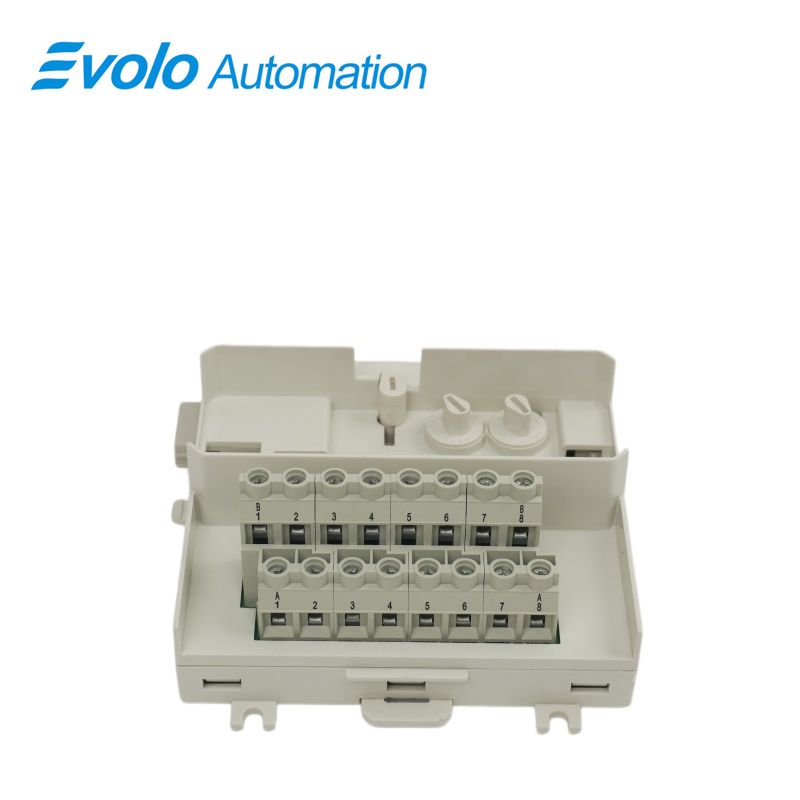
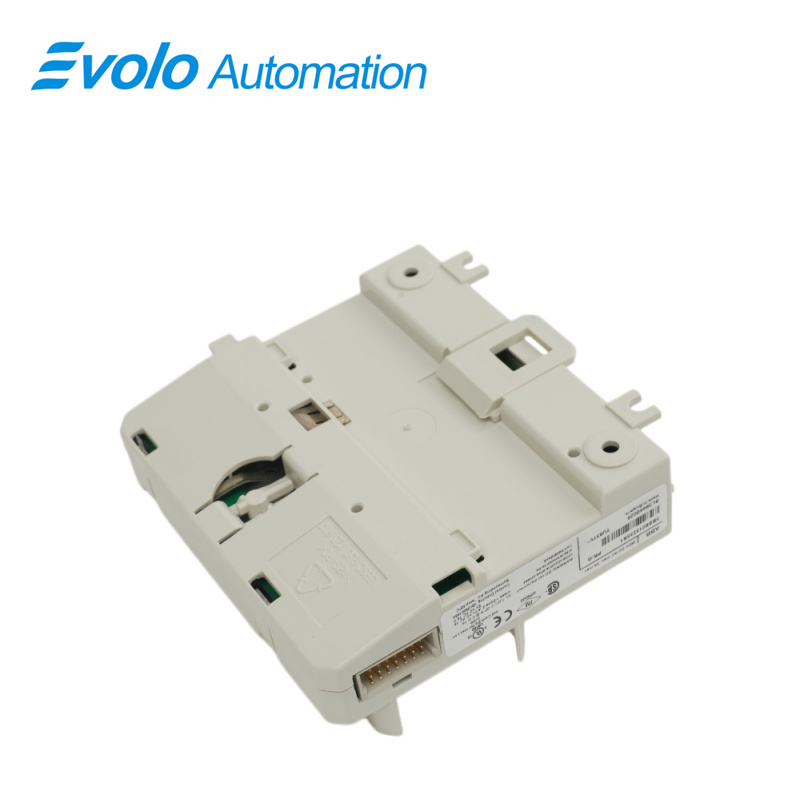
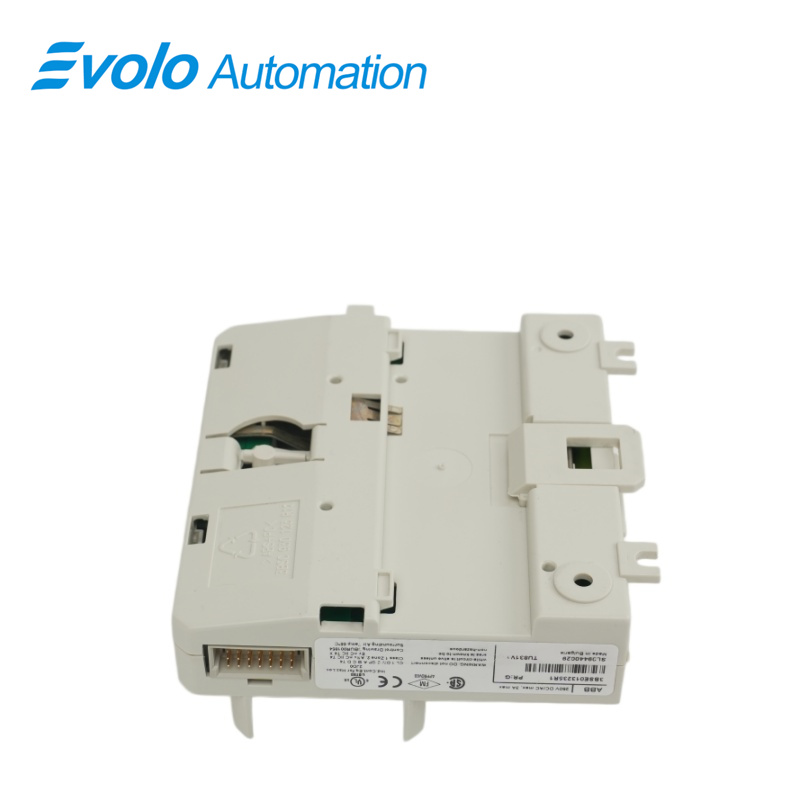
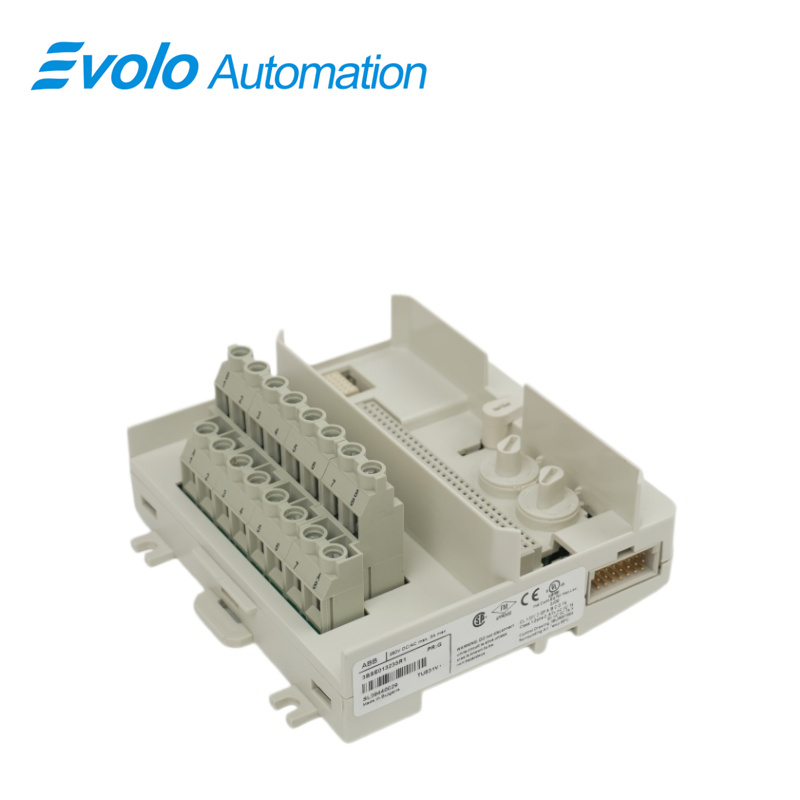
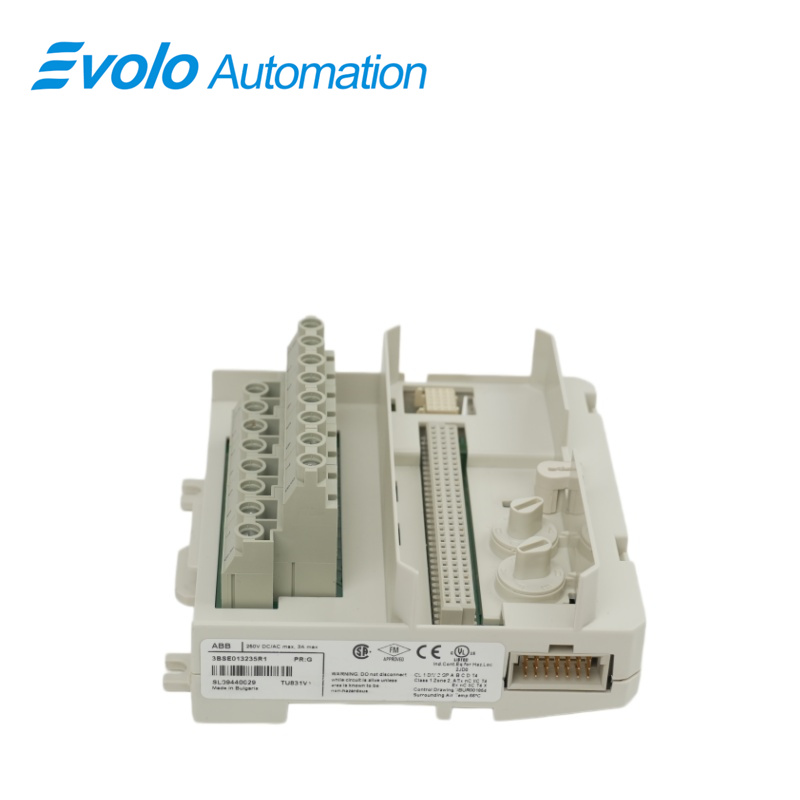
The TU831V1 3BSE013235R1 MTU can have up to 8 I/O channels. The maximum rated voltage is 250 V and maximum rated current is 3 A per channel.
The MTU distributes the ModuleBus to the I/O module and to the next MTU. It also generates the correct address to the I/O module by shifting the outgoing position signals to the next MTU. The MTU can be mounted on a standard DIN rail. It has a mechanical latch that locks the MTU to the DIN rail.
Environment and certification
|
Parameter |
Value |
|
CE mark |
Yes |
|
Electrical safety |
EN 61010-1, UL 61010-1, EN 61010-2-201, UL 61010-2-201 |
|
Hazardous Location |
- |
|
Marine certification |
ABS, BV, DNV-GL, LR |
|
Temperature, Operating |
0 to +55 °C (+32 to +131 °F), approvals are issued for +5 to +55 °C |
|
Temperature, Storage |
-40 to +70 °C (-40 to +158 °F) |
|
Pollution degree |
Degree 2, IEC 60664-1 |
|
Corrosion protection |
ISA-S71.04: G3 |
|
Relative humidity |
5 to 95 %, non-condensing |
|
Max ambient temperature |
55 °C (131 °F) |
|
Protection class |
IP20 according to IEC 60529 |
|
Mechanical operating conditions |
IEC/EN 61131-2 |
|
EMC |
EN 61000-6-4, EN 61000-6-2 |
|
Overvoltage categories |
IEC/EN 60664-1, EN 50178 |
|
Equipment class |
Class I according to IEC 61140 (earth protected) |
|
RoHS compliance |
EN 50581:2012 |
|
WEEE compliance |
DIRECTIVE/2012/19/EU |
Applications
Petrochemical plants: Used to connect transmitters and precision instruments requiring on-site power.
Paper and pulp mills: Simplify wiring for multi-wire sensors in complex sensor networks.
Coal power plants: Used for power aggregation and signal acquisition from numerous transmitters within control cabinets.
Wastewater treatment plants: Manage control loops with active feedback signals in pumping stations.
Machinery plants: Provide unified power distribution for sensors in automated production lines.
Features and benefits
Greater connection area for larger wires.
Up to 8 isolated channels of field signals.
Connections to ModuleBus and I/O modules.
Mechanical keying prevents insertion of the wrong I/O module.
Latching device to DIN rail for grounding.
DIN rail mounting.
FAQ
Q: What are the differences between TU831V1 3BSE013235R1 and TU810V1?
A: TU831V1 3BSE013235R1 is an extended type, with each signal point having its own power supply and common terminal, suitable for 3-wire devices; TU810V1 only has signal terminals, suitable for single-wire systems.
Q: Does TU831V1 3BSE013235R1 support hot-swappable modules?
A: Yes. S800 I/O modules can be plugged in and out at any time while keeping TU831V1 3BSE013235R1 fixed.
Q: Can TU831V1 3BSE013235R1 be used with a 220V power supply?
A: Absolutely not. This model is rated for only 50V. For 220V applications, please choose TU835 or TU838.
Q: What is the maximum current per channel for TU831V1 3BSE013235R1?
A: Typically, each channel is limited to 2A, and the total current of the entire base must comply with the manual specifications.
Q: Does replacing TU831V1 3BSE013235R1 require system shutdown?
A: Yes. Replacing the entire MTU base will disconnect the ModuleBus link, resulting in communication interruption.