EN
EN




- Overview
- Specifications
- Description
- Applications
- Feature
- Adjustment
- FAQ
- Recommended Products
Overview
Place of Origin: |
Sweden |
Brand Name: |
ABB |
Model Number: |
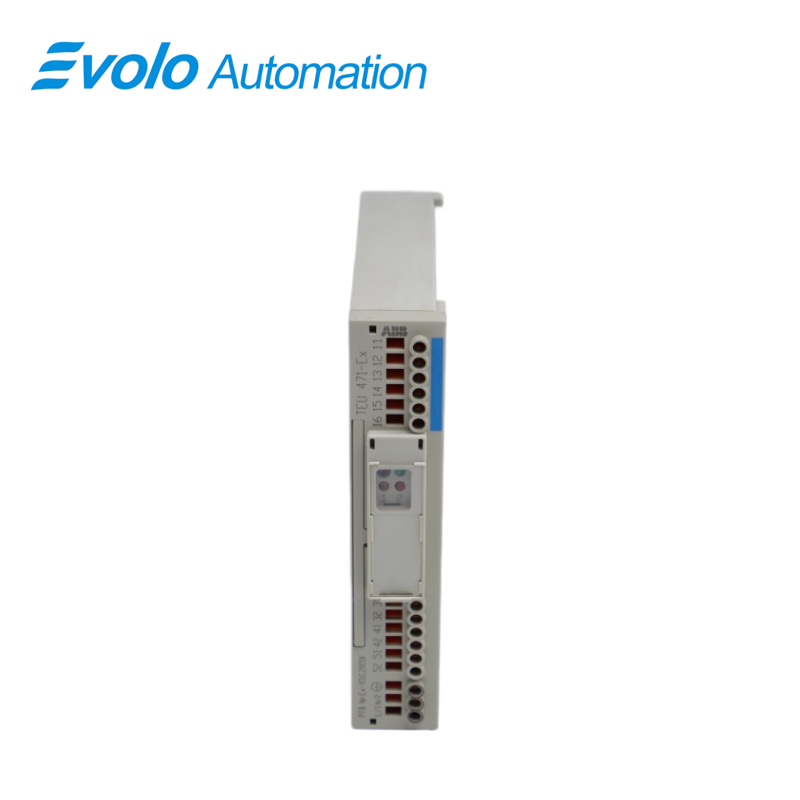
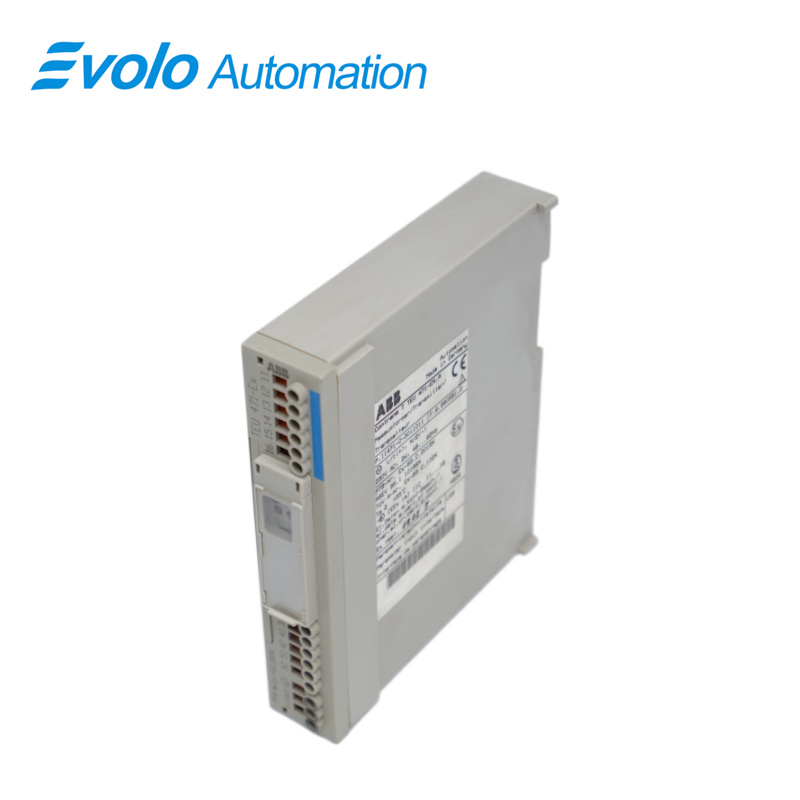
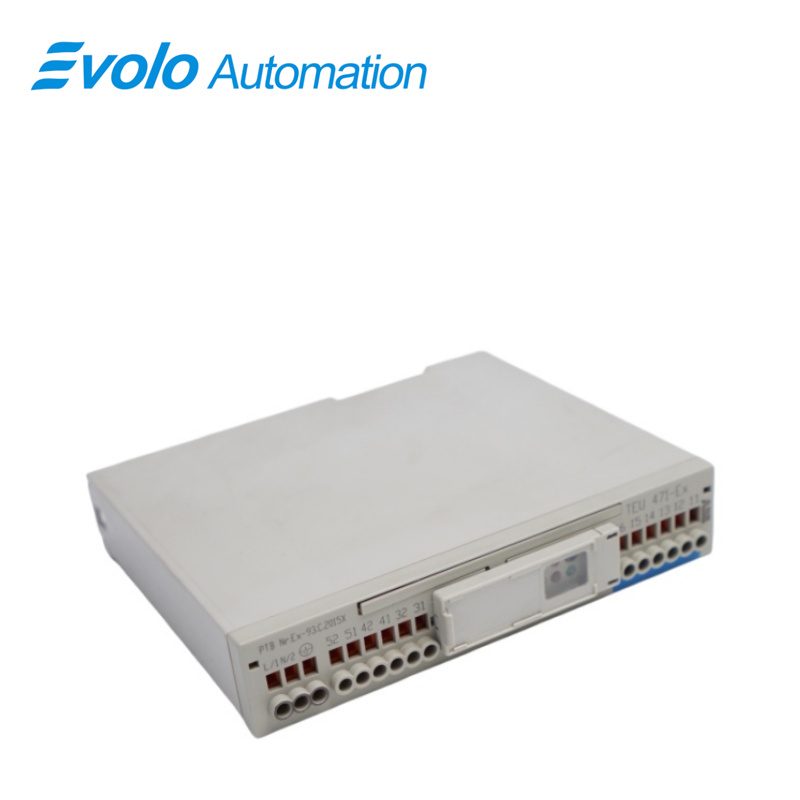
TEU471-EX.A P.11471-0-3011011 F.6.880581.2 |
Packaging Details: |
Original new Factory Sealed |
Delivery Time: |
5-7 days |
Payment Terms: |
T/T |
Supply Ability: |
In stock |
Specifications
|
Parameter |
Value |
|
Model |
TEU471-EX.A P.11471-0-3011011 F.6.880581.2 |
|
Module Type |
Temperature Transmitter |
|
Dimensions |
2.8 x 13 x 14.8 cm |
|
Weight |
0.34 kg |
|
Position of Use |
Vertical |
|
Ambient Temperature |
-10°C to +55°C (standard), -10°C to +70°C (extended) |
|
Condensation |
None |
|
Degree of Protection |
IP20 |
|
Supply Voltage |
24 V UC; 115 V AC; 230 V AC (switchable to 24 V UC) |
|
Alternating Voltage |
Tolerance: -15% to +10%, 48–62 Hz |
|
Direct Voltage |
18–33 V |
|
Residual Ripple |
≤ 20% within tolerance range |
|
Power Consumption |
24 V UC: ~1.2 W / 1.5 VA; 115 V AC: ~2 W / 5 VA; 230 V AC: ~2 W / 8 VA |
|
Climatic Category |
JSF to DIN 40040 |
|
Transportation & Storage Temperature |
-25°C to +85°C |
|
Relative Humidity |
≤ 75% |
|
Shock Resistance |
30g / 18 ms (transport) |
|
Vibration Resistance |
2g / ±0.15 mm / 5–150 Hz / 3x5 cycles; 2g / ±10 mm / 1–35 Hz / 3x1 cycle (operation) |
|
Ambient Temperature Accuracy |
(0.05 % ⋅ MV + 0.05 % + K3)/10 K; internal reference junction adds 0.1 K / 10 K |
|
Power Supply Effect |
< 0.05 % with 10% voltage change; < 0.05 % with 48–62 Hz frequency change |
|
Output Effect |
≤ 0.1 % for current (0–700 Ω load); ≤ 0.1 % for voltage (10 kΩ–∞) |
|
Parasitic Voltage Effect |
50 Hz symmetrical: < 0.5 % with Ustör(ss) = 0.3 ⋅ span (τ = 0 s) |
Description
The TEU471-EX.A P.11471-0-3011011 F.6.880581.2 temperature transmitter transforms the signal coming from the sensor into a load-independent direct current or voltage signal. The input signals are led to the measuring point selector switch MUX via the input protection circuit. The standard input variables (mV, , V, mA) are matched to the input voltage range of the amplifier by means of a filter network. The pulse-width modulator PWM converts the voltage coming from the amplifier into a pulse-pause ratio. Correction values for the zero and slope are determined from the test measurements (zero and reference voltage) and are stored. The (sensor) break monitoring checks the sensor impedance for a maximum value. The CPU fulfils several tasks.
Applications
Thermal power plants: Monitoring the precise temperature of boilers, turbines, and high-temperature pipelines.
Petrochemical plants: Temperature monitoring in flammable and explosive oil refining or chemical production areas.
Pharmaceutical manufacturing plants: Used in bioreactors and fermenters requiring strict temperature control.
Food processing plants: Providing standardized temperature signal feedback during sterilization or baking processes.
Steel and iron metallurgical plants: Handling the long-distance transmission of sensor signals in high-temperature smelting environments.
Feature
Input/sensor connection:
– Resistance thermometers (2-, 3-, 4-wire circuit)
– Thermocouples (without, with internal/external reference junction)
– Resistance teletransmitters
– Ω, mV, mA, V sensors
Output 0/4...20 mA, 0...10 V
Digital interface for communication
– LCI (parameter setting at the factory)
– FSK (remote parameter setting, bus operation)
Parameter setting with IBIS PC software package (menu-driven to VDI/VDE 2187)
– Validity check of the inputs
– Diagnostic and commissioning functions
– Assistance at every processing level
– Feedback documentation
Rugged compact case in degree of protection IP 20
for rail mounting
Digital, low-drift measured-value processing
Continuous sensor and self-monitoring
Default value strategy in the event of faults
Adjustment
The transmitter TEU471-EX.A P.11471-0-3011011 F.6.880581.2 is supplied in an adjusted condition. Readjustment is only necessary:
– if resistances other than those specified are incorporated when modifying the measuring circuit combination
– if greater accuracy is required than that specified in the technical data (precision balancing of lower-range value and upper-range value)
– when switching the output from mA to V or vice versa.
The Device Management Tool DSV4xx (SMART VISION) provides information on adjustment.
Additional aids:
– Precision source (for the input)
– Measuring instrument (for the output).
FAQ
Q: Can TEU471-EX.A P.11471-0-3011011 F.6.880581.2 be installed in an explosion-proof area?
A: No. Although its input circuitry is intrinsically safe, the transmitter itself must be installed in a non-hazardous area such as a control cabinet or safe zone.
Q: If the sensor type is changed, does TEU471-EX.A P.11471-0-3011011 F.6.880581.2 need to be replaced?
A: No. The TEU471-EX.A P.11471-0-3011011 F.6.880581.2 supports universal input configuration, and parameters can be adjusted via IBIS or SMART VISION software.
Q: Why does the green LED on TEU471-EX.A P.11471-0-3011011 F.6.880581.2 light up only after 4 seconds of power-on?
A: This is the normal power-on self-test process. A steady green LED indicates that the device is fully initialized and ready for operation.
Q: Does TEU471-EX.A P.11471-0-3011011 F.6.880581.2 support 2-wire RTDs?
A: Yes. However, line compensation is recommended to reduce measurement errors caused by lead resistance.
Q: What is the LKS interface on TEU471-EX.A P.11471-0-3011011 F.6.880581.2?
A: It is ABB’s proprietary local communication interface, typically used for fast parameter configuration and factory setup at engineering workstations.