EN
EN





- Overview
- Specifications
- Description
- Applications
- Maintenance Recommendations
- FAQ
- Recommended Products
Overview
Place of Origin: |
Sweden |
Brand Name: |
ABB |
Model Number: |
SPNIS21 |
Packaging Details: |
Original new Factory Sealed |
Delivery Time: |
5-7 days |
Payment Terms: |
T/T |
Supply Ability: |
In stock |
Specifications
|
Parameter |
Value |
|
Model |
SPNIS21 |
|
Module Type |
Network Interface Module |
|
Net Depth / Length |
73.66 mm |
|
Net Height |
358.14 mm |
|
Net Width |
271.78 mm |
|
WEEE Category |
5. Small Equipment (No External Dimension More Than 50 cm) |
|
Number of Batteries |
0 |
|
Battery Chemical Composition |
Lithium |
|
Battery Type |
Button Cell |
|
Battery Weight |
5 g |
|
Series |
HR Series (Harmony Rack) I/O |
|
Power Requirements |
+5 VDC at 825 mA: 4.1 W; +5 VDC at 1.1 A: 5.5 W |
|
System Capability |
Cnet (INFI-NET): Over 62,000 nodes; 250 Cnet-to-Cnet interface nodes; 250 nodes per network (any combination of Cnet-to-HCU and Cnet-to-computer) |
|
Communication Rates |
10 Mbaud, 2 Mbaud, or 0.5 Mbaud |
|
Mounting |
Occupies one slot in a standard module mounting unit |
|
Ambient Temperature |
0°C to 70°C (32°F to 158°F) |
|
Relative Humidity |
20% to 95% up to 55°C (131°F) non-condensing; 20% to 45% from 55°C to 70°C (131°F to 158°F) non-condensing |
|
Atmospheric Pressure |
Sea level to 3 km (1.86 mi) |
|
Air Quality |
Noncorrosive |
Description
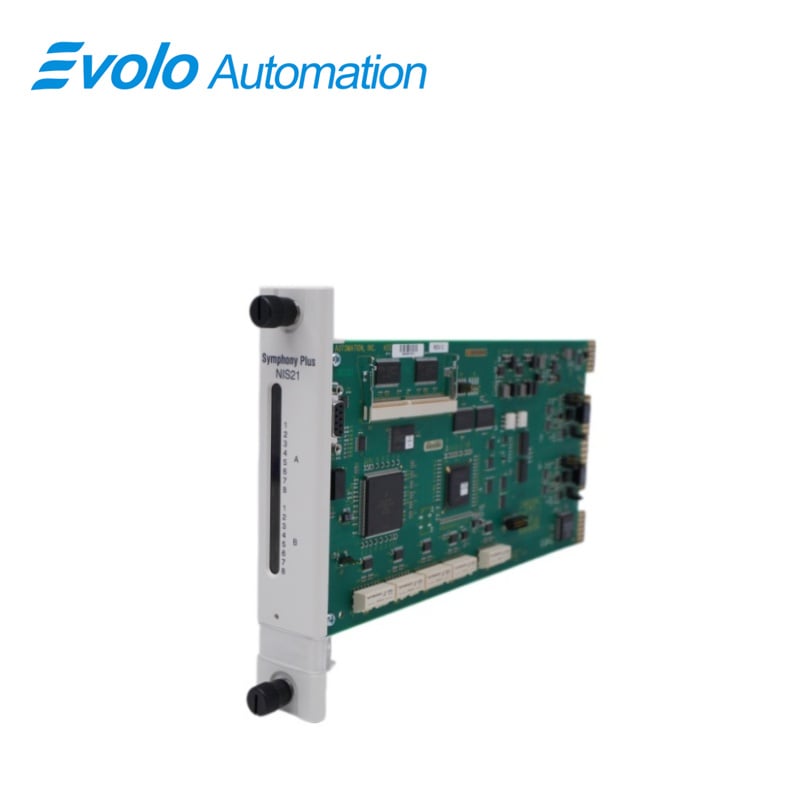
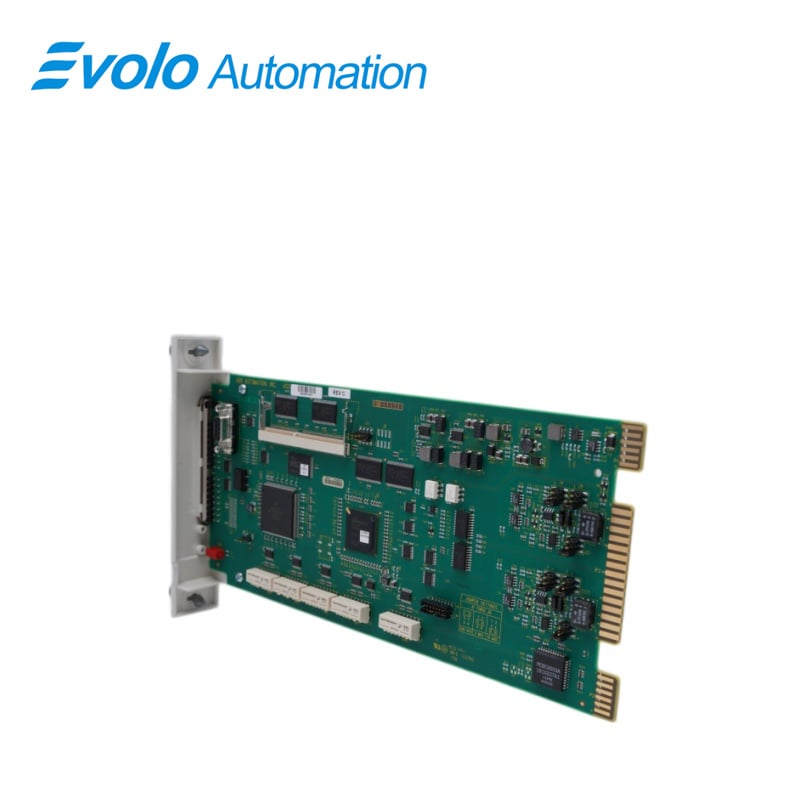
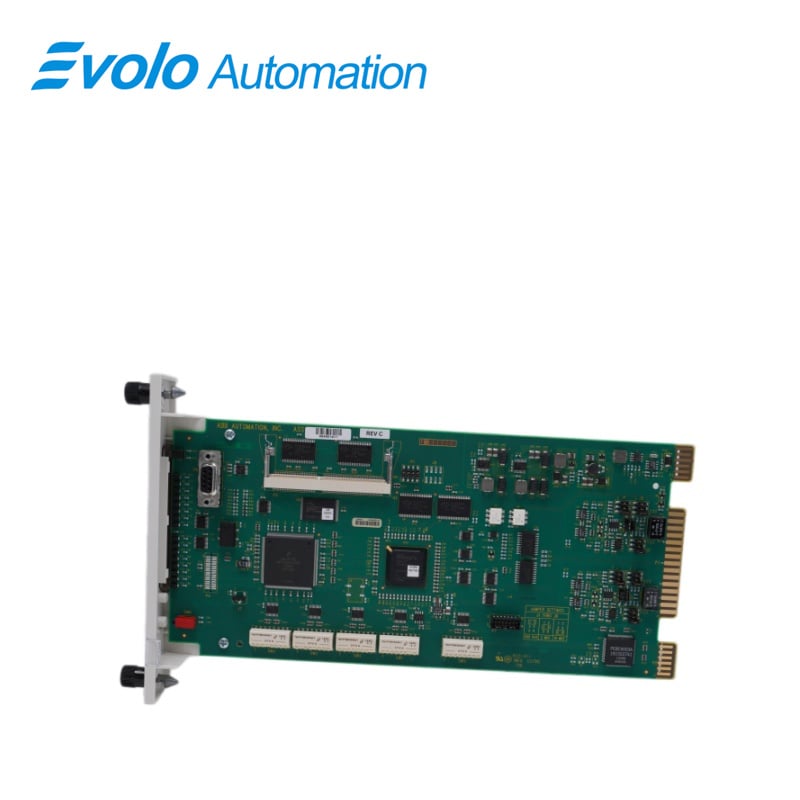
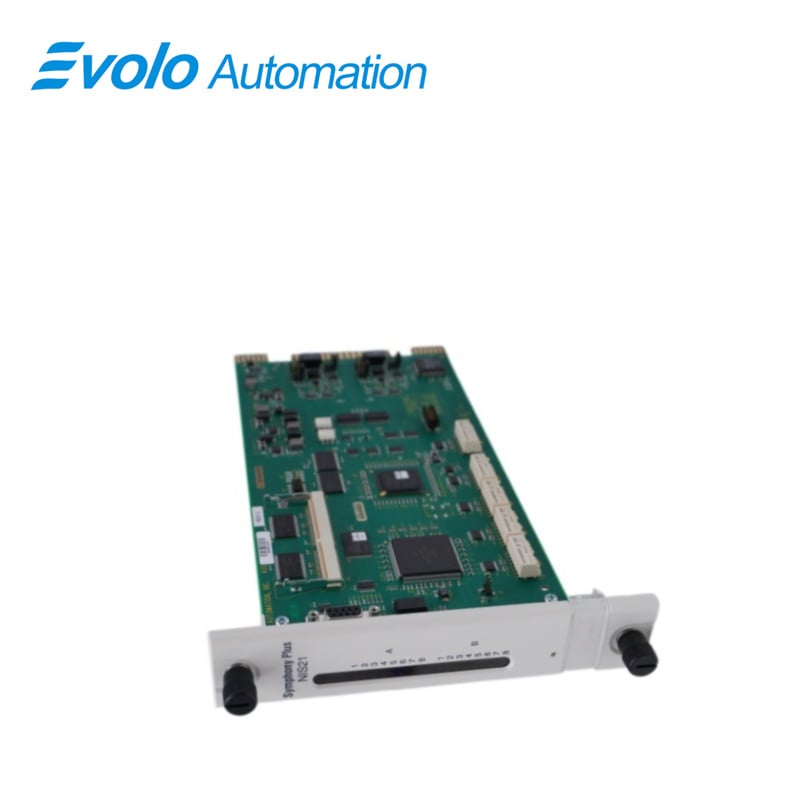
The Cnet-to-HCU interface consists mainly of the SPNIS21 Network Interface Module and the SPNPM22 Network Processing Module. These modules are Harmony rack modules, which provide a Harmony control unit with access to Control Network (Cnet) in the Symphony Enterprise Management and Control System. The SPNIS21 Network Interface Module is the front end of every Cnet communication interface. It is the intelligent link between a node and the Cnet. The SPNIS21 module allows any node to communicate with any other node within the Symphony system. The NIS21 module is a single printed circuit board that occupies one slot in a module mounting unit (MMU).
Applications
Thermal power plants: Ring network interface for main DCS systems (such as boiler and turbine control).
Large steel plants: Network connection node for blast furnace automation control systems.
Fine chemical plants: Data integration for distributed control systems of reactors.
Cement production plants: Relay communication for raw material mill and kiln automation systems.
Waterworks: Remote networking between the plant-wide monitoring system and each pumping station.
Maintenance Recommendations
Secure Interfaces: Regularly check backplane slots and network cable connectors to prevent loosening due to vibration.
Electrostatic Discharge Protection: Always wear an anti-static wrist strap when replacing or unplugging this module to avoid electrostatic discharge.
Redundancy Check: For redundant configurations, regularly verify that the synchronization indicator lights of the primary/standby modules are functioning correctly.
FAQ
Q: Is there a difference between the SPNIS21 and the traditional NIS01?
A: Yes. The SPNIS21 is an upgraded Symphony Plus version, providing more stable performance and improved compatibility, and is commonly used to replace older NIS modules.
Q: Does the SPNIS21 module require independent power?
A: No. The SPNIS21 receives 5V/24V DC power directly from the rack backplane.
Q: If the SPNIS21 fails, will the controller still operate?
A: The controller’s local control logic can continue running, but communication with the host system and other nodes will be lost. In redundant systems, it will automatically switch to the standby module.
Q: What does “F” on the SPNIS21 seven-segment display indicate?
A: It typically stands for a Fatal Error, meaning the module has detected a critical internal hardware or software fault.
Q: Do I need to re-download the program after replacing the SPNIS21?
A: Usually not. Since it mainly handles communication, configuration data is stored in the controller and will automatically synchronize after startup.