EN




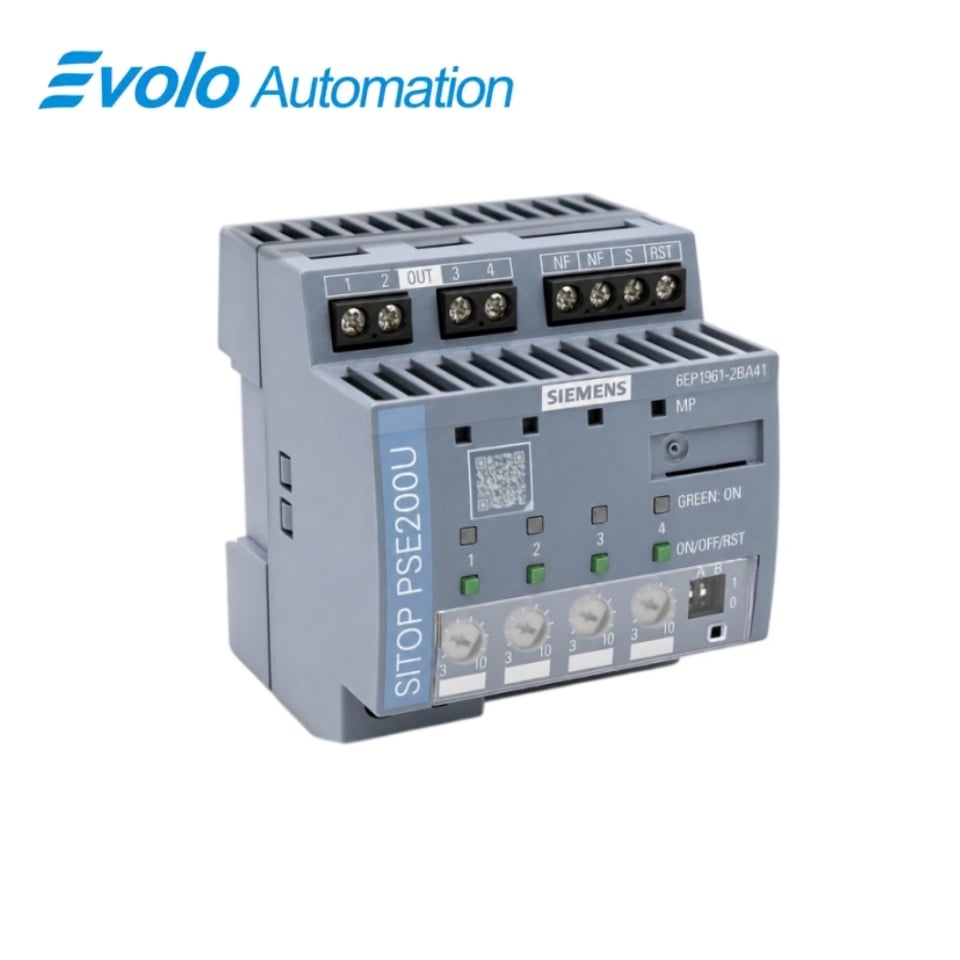
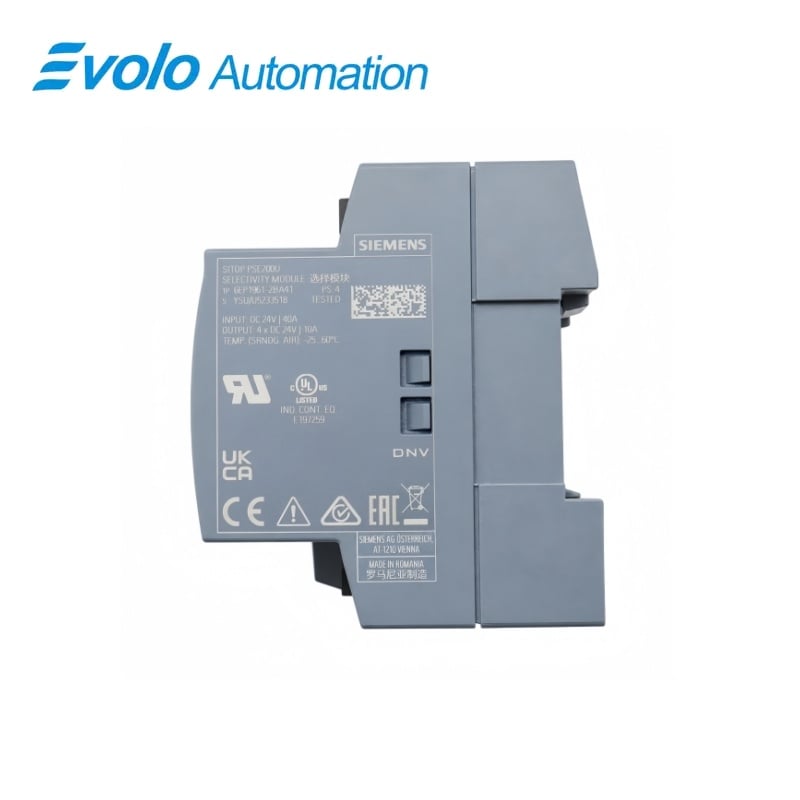
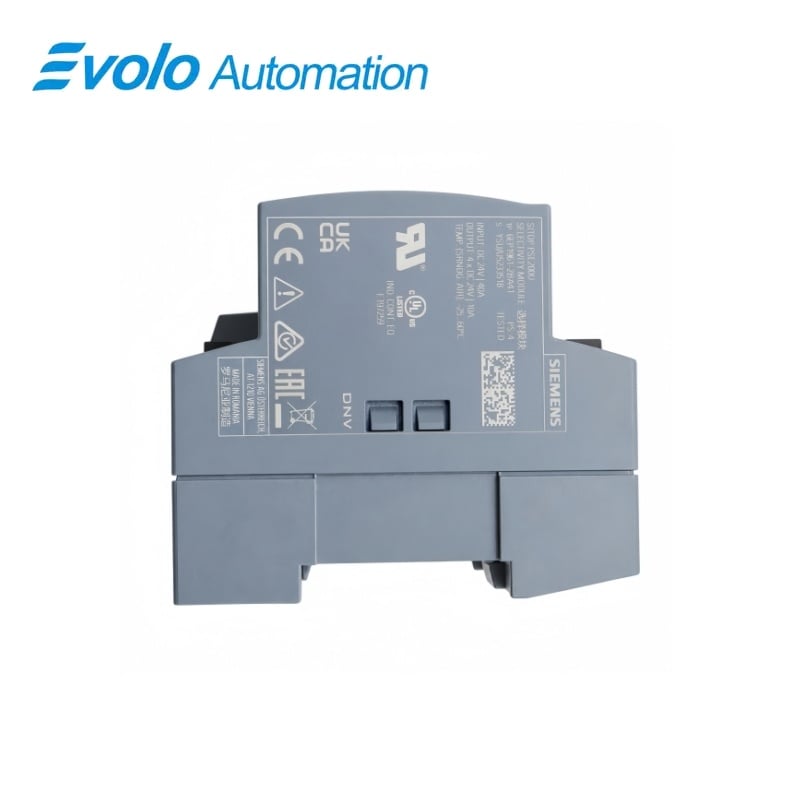
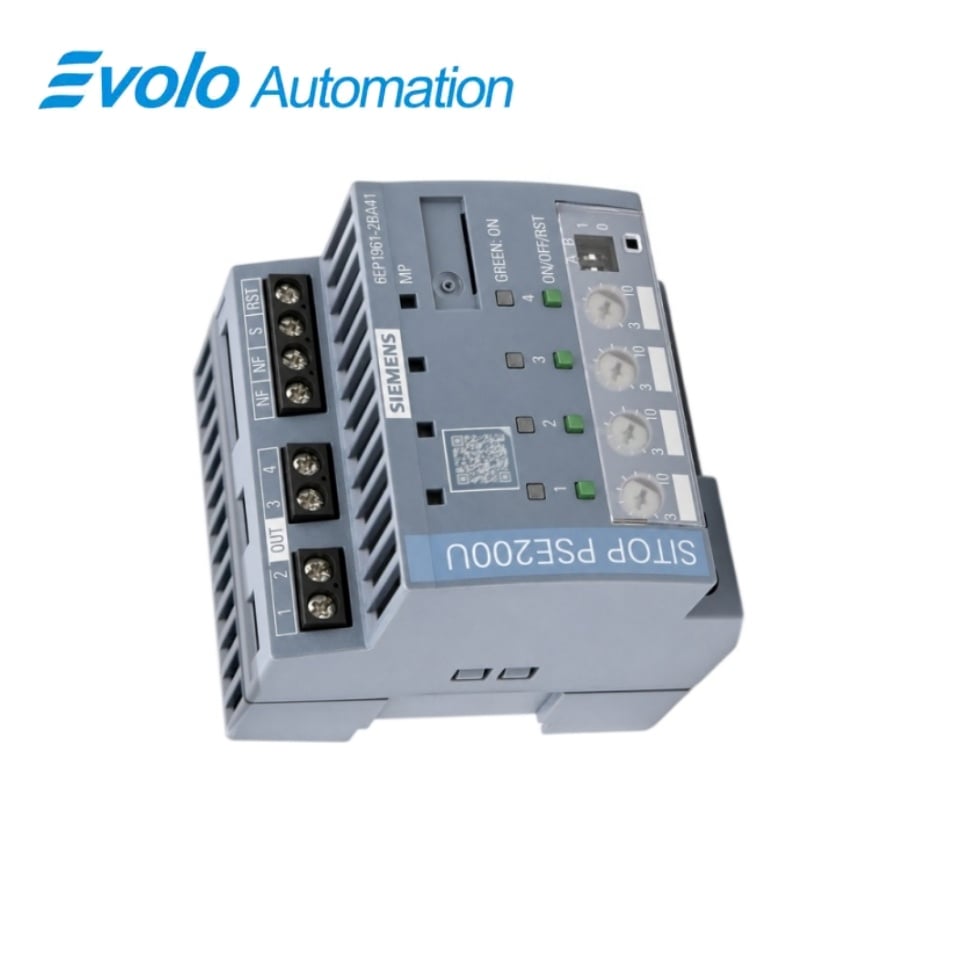
Siemens 6EP1961-2BA41 SITOP PSE200U 4-Channel 3–10 A Selectivity Module
Manufacturer: Siemens
Condition: Brand New
Lead Time: In Stock
Origin: Germany
Warranty: 12 Months
Email: [email protected]
whatsApp: +86-18150117685
- Overview
- Hot Selling Models
- Recommended Products
Overview
- Size the regulated DC source for the combined branch demand and startup loads.
- Set each threshold for the connected branch and its wiring.
- Configure startup sequencing before commissioning high-inrush loads.
- Allow 50 mm above and below the DIN-rail-mounted module and provide the correct status-input evaluation.
6EP1961-2BA41 SITOP PSE200U 4-Channel 3–10 A Selectivity Module
A four-channel DC selectivity module with independently adjustable trip thresholds and single-channel status signaling.
At a Glance
| Brand | Siemens |
|---|---|
| Model | 6EP1961-2BA41 |
| Product Type | Electronic selectivity module |
| Core Function | Selective DC branch protection |
| Application | Industrial DC distribution circuits |
Independent branch thresholds
Each of the four outputs has an adjustable 3–10 A response threshold.
Staggered load startup
DIP-switch settings select simultaneous startup or sequential startup with fixed or load-optimized timing.
Per-channel diagnostics
Three-color output LEDs and a pulse/pause status signal identify the state of each branch.
Product Overview
6EP1961-2BA41 distributes a regulated DC supply to four selectively monitored load branches.
Adjustable branch thresholds, configurable startup sequencing and a pulse/pause status output support coordinated load startup and controller diagnostics.
Key Functions
Independent branch thresholds
Each of the four outputs has an adjustable 3–10 A response threshold.
Staggered load startup
DIP-switch settings select simultaneous startup or sequential startup with fixed or load-optimized timing.
Per-channel diagnostics
Three-color output LEDs and a pulse/pause status signal identify the state of each branch.
Official Specifications
| DC input | 24 V nominal; 22–30 V range |
|---|---|
| Rated input current | 40 A |
| Protected outputs | 4 channels, rated 10 A each up to +60 °C |
| Adjustable trip threshold | 3–10 A per output via potentiometer |
| Output voltage drop | Approximately 0.2 V below input |
| Startup sequencing | Simultaneous or sequential; 25 ms, 100 ms or load-optimized delay |
| Moderate overcurrent trip | Approximately 5 s at 1.0–1.5 times the set current |
| Current-limiting trip | Typically 100 ms at 1.5 times the set current |
| Fast trip | Approximately 0.5 ms when input falls below 20 V and output exceeds its set current |
| Residual current after switch-off | Typically 1 mA |
| Remote reset | 24 V non-isolated input; high signal above 15 V |
| Status output | Pulse/pause signal for individual-output status evaluation |
| Typical efficiency and dissipation | 99% efficiency; 10 W dissipation at rated load |
| Protection | IP20; Class III |
| Operating ambient | −25 to +60 °C with natural convection |
| Dimensions | 72 × 80 × 72 mm (W × H × D) |
| Net weight | 0.2 kg |
Frequently Asked Questions
Can I set different trip currents on the four branches of 6EP1961-2BA41?
Each output has its own potentiometer for a threshold between 3 A and 10 A.
Can I parallel two outputs of 6EP1961-2BA41 to supply a larger load?
Parallel connection of the protected outputs is not supported.
How can 6EP1961-2BA41 reduce simultaneous inrush from several loads?
Its startup configuration can switch outputs on sequentially with a 25 ms, 100 ms or load-optimized delay.
What does a yellow output LED on 6EP1961-2BA41 mean?
A yellow LED identifies an output that has been switched off manually.
How does 6EP1961-2BA41 report the status of individual outputs to a controller?
The status output uses a pulse/pause signal that can be evaluated with a SIMATIC function block.
What signal is needed to remotely reset 6EP1961-2BA41?
The non-isolated remote-reset input recognizes a high signal above 15 V.
Does an output switched off by 6EP1961-2BA41 provide galvanic isolation?
Switching an output off does not electrically isolate it from the input.