EN
EN




- Overview
- Specifications
- Description
- Applications
- Features
- Instructions for commissioning
- FAQ
- Recommended Products
Overview
Place of Origin: |
Sweden |
Brand Name: |
ABB |
Model Number: |
REA107-AA RLY-REA107-AAA |
Packaging Details: |
Original new Factory Sealed |
Delivery Time: |
5-7 days |
Payment Terms: |
T/T |
Supply Ability: |
In stock |
Specifications
|
Parameter |
Value |
|
Model |
REA107-AA RLY-REA107-AAA |
|
Product Type |
Arc Protection Module |
|
Dimensions |
20.3 x 18.5 x 3 cm |
|
Weight |
0.96 kg |
|
Signal Contacts |
Type: Light 1–4, Light 5–8 |
|
Maximum System Voltage |
250 V DC/AC |
|
Continuous Carry Current |
5 A |
|
Make & Carry (0.5 s) |
10 A |
|
Make & Carry (3 s) |
8 A |
|
DC Breaking Capacity |
1 A / 0.25 A / 0.15 A (48/110/220 V DC, L/R ≤ 40 ms) |
|
Power Consumption (quiescent / operating) |
1.7 W / ~2.7 W |
|
Max Extension Units per Port |
5 (via REA 101 port) |
|
Lens Sensor Operating Temperature |
-40 °C to +100 °C |
|
Lens Sensor Max Temperature (+1h) |
+140 °C |
|
Minimum Fiber Bending Radius |
100 mm |
|
Connection Cable Length (master-slave) |
Max 40 m |
|
Operating Time (from light) |
< 1.0 ms |
|
Service Temperature Range |
-10 °C to +55 °C |
|
Transport/Storage Temperature |
-40 °C to +70 °C |
|
Protection Class |
IP20 (IEC 60529) |
|
Weight (module) |
1.0 kg |
|
Dielectric Test |
2 kV, 50 Hz, 1 min (IEC 60255-5) |
|
Impulse Voltage Test |
5 kV, 1.2/50 µs, 0.5 J |
|
Insulation Resistance |
>100 MΩ @ 500 V DC |
|
EMC 1 MHz Burst (common mode) |
2.5 kV |
|
EMC 1 MHz Burst (differential mode) |
1.0 kV |
|
Electrostatic Discharge (ESD) |
6 kV contact discharge (Class III) |
|
Fast Transient Disturbance |
4 kV |
|
Surge Immunity (line to earth) |
2 kV |
|
Surge Immunity (line to line) |
1 kV |
Description
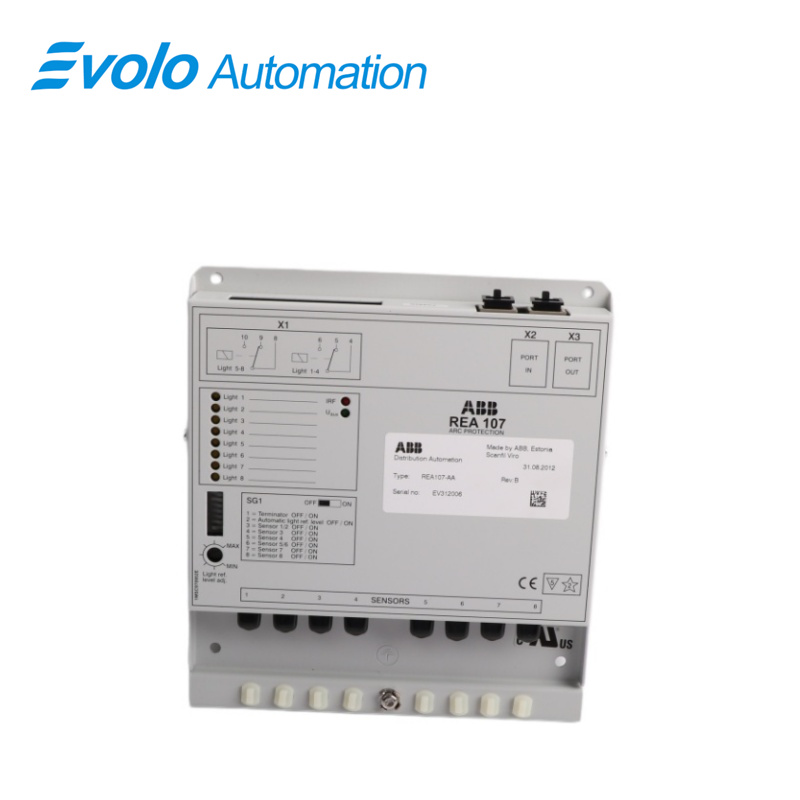
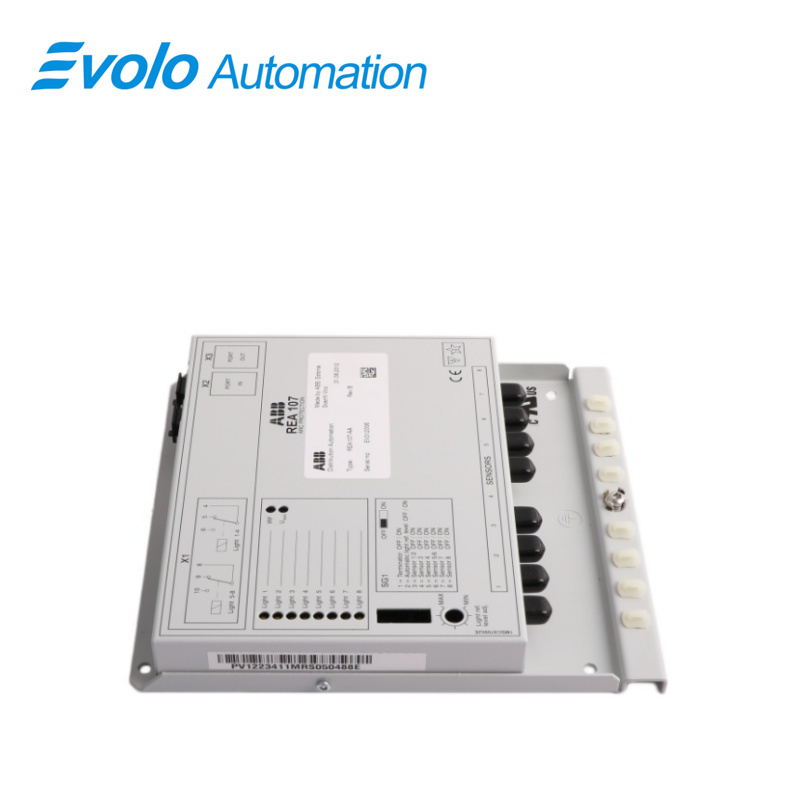
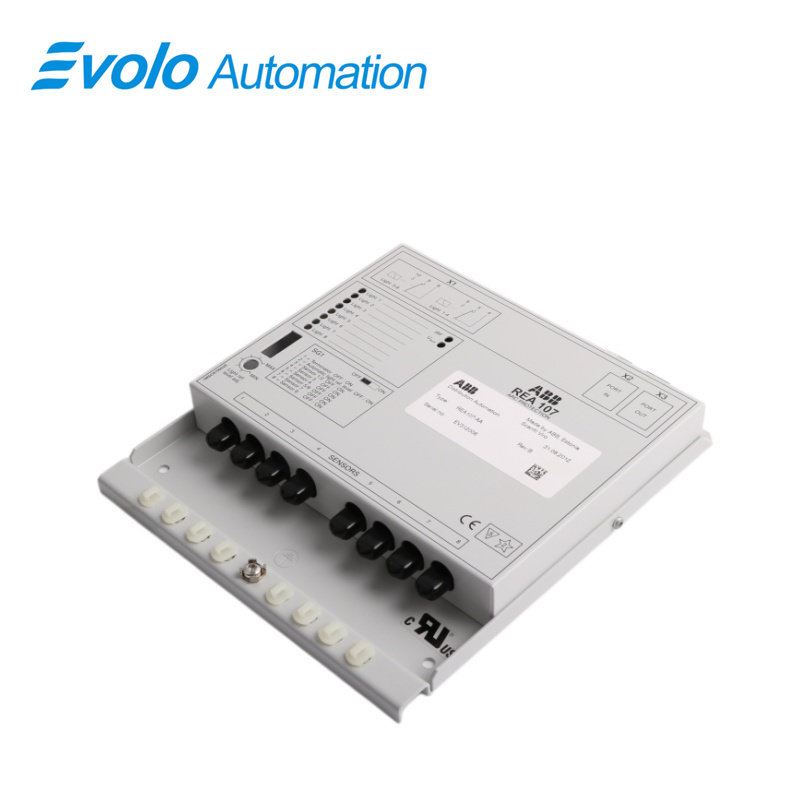
REA107-AA RLY-REA107-AAA is an extension unit designed to be used together with the arc protection relay REA 101. The function of the unit is to detect light and to provide the REA 101 relay with information about this. The use of the extension unit allows the protection area to be extended and the object to be divided into smaller areas.
Applications
Petrochemical plants: 24/7 monitoring of substations containing corrosive gases.
Steel and iron smelting plants: Protection of high-voltage switchgear rooms against phase-to-phase short-circuit arcing caused by metal dust.
Shipbuilding plants: Protection of marine switchgear within confined spaces to prevent arcing accidents at sea.
Rail transit plants: Protection of low-voltage/medium-voltage switchgear in traction substations.
Large data centers: Protection of precision switchgear (RPP) to ensure zero power interruption.
Features
Eight lens type sensors for arc detection
Two signal relays
Two RJ-45 ports for the connection to a REA 101 relay and/or other extension units
Self-supervision unit monitoring operating voltages
LED indicators for each sensor
Instructions for commissioning
The following procedure should be followed when the unit is commissioned:
1.Switchgroup SG1
Default setting:SG1 00000000
Set the switches as required by the application. See sections "Function of LEDs and switches” in this manual and “Application examples” of the REA 101 Operator's manual
2. Potentiometer “Light Ref. Level Adj."
Default setting: middle position. If the SG1/2 switch is set for automatic backlight compensation, the setting of the potentiometer does not have to be changed.
FAQ
Q1: What do the 8 lights on the REA107-AA RLY-REA107-AAA represent?
A: Each light matches one lens sensor. Green means normal; red indicates arc detection or sensor fault.
Q2: Can the AAA coated version of the REA107-AA RLY-REA107-AAA be used in normal factories?
A: Yes. Its coated design improves moisture and dust resistance, extending service life.
Q3: How is the REA107-AA RLY-REA107-AAA connected to the REA101 main module?
A: It connects directly through a dedicated fiber or electrical bus for monitoring and trip coordination.
Q4: Will the REA107-AA RLY-REA107-AAA falsely trip if the sensor fiber breaks?
A: No. It performs self-diagnostics and outputs a service alarm when fiber damage is detected.
Q5: Where should the lens sensor of the REA107-AA RLY-REA107-AAA be installed?
A: Install it near high-risk arc areas such as cable joints, breaker contacts, or busbar connections.