EN
EN




- Overview
- Specifications
- Description
- Applications
- FUNCTIONS
- FREQUENTLY ASKED QUESTIONS
- Recommended Products
Overview
Place of Origin: |
USA |
Brand Name: |
GE |
Model Number: |
IS200EXAMG1AAB |
Packaging Details: |
Original new Factory Sealed |
Delivery Time: |
5-7 days |
Payment Terms: |
T/T |
Supply Ability: |
In stock |
Specifications
|
Part Number: |
IS200EXAMG1AAB |
|
Manufacturer: |
General Electric |
|
Product Type: |
Exciter Attenuation Module |
|
Series: |
EX2100 |
|
Group Variation: |
H2, Dual System |
|
Module Description: |
I/O Terminal Board |
|
Number of Channels: |
13 |
|
Functionality: |
Field Current and Voltage Feedback |
|
Number of Selector Settings: |
8 |
|
Control Sections: |
Up to Three Redundant Control Sections |
|
Operating System: |
Dual System |
|
AC Input Frequency: |
Up to 480 Hz |
|
Ambient Temperature: |
0°C to 40°C |
|
Dimensions (HxWxD): |
23 x 19.2 x 3.2 cm |
|
Weight: |
0.5 kg |
|
Country of Manufacture: |
United States (USA) |
Description
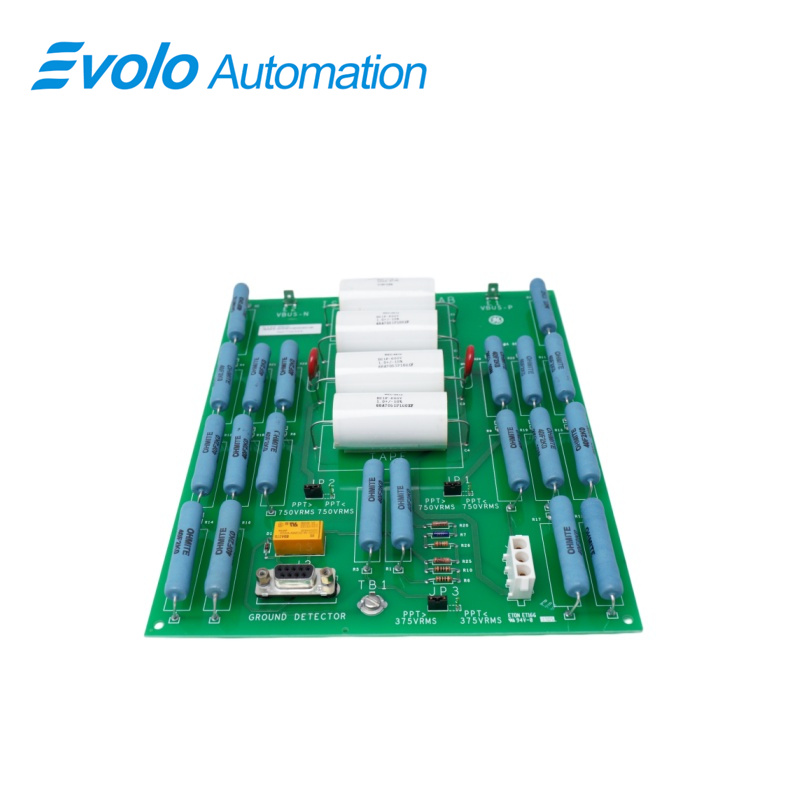
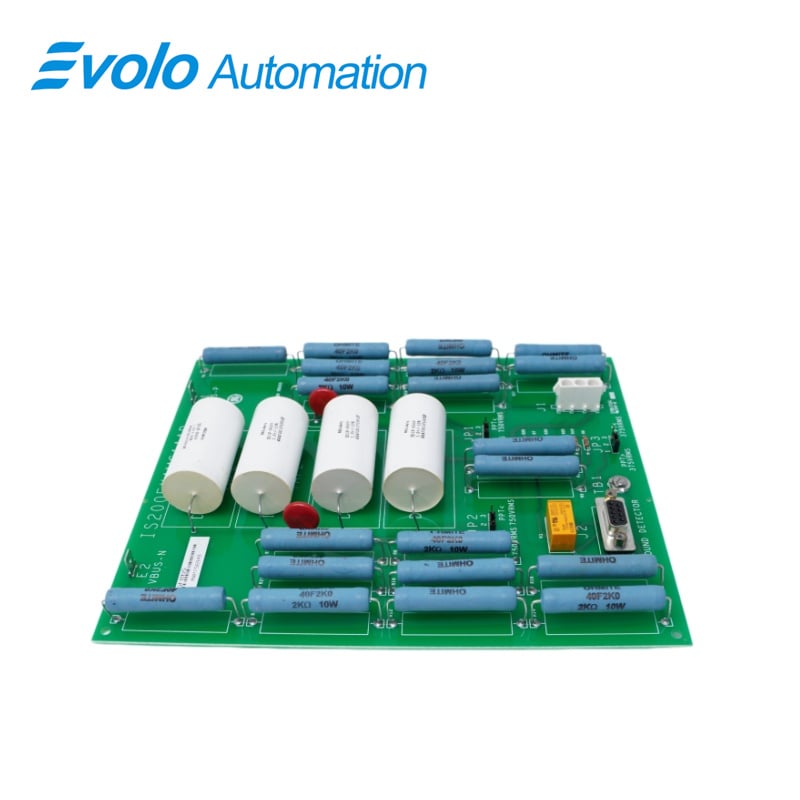
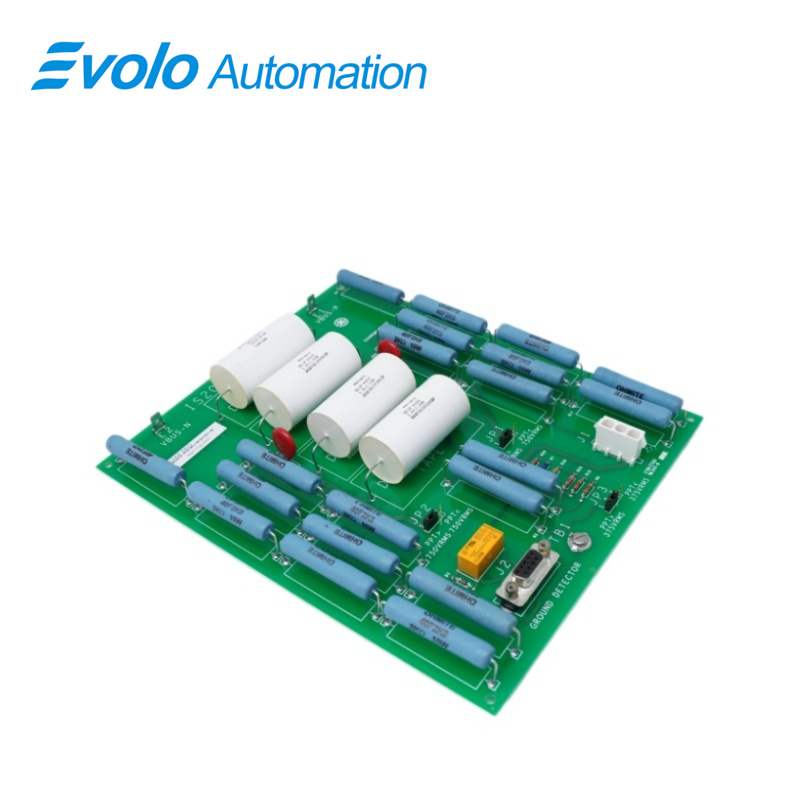
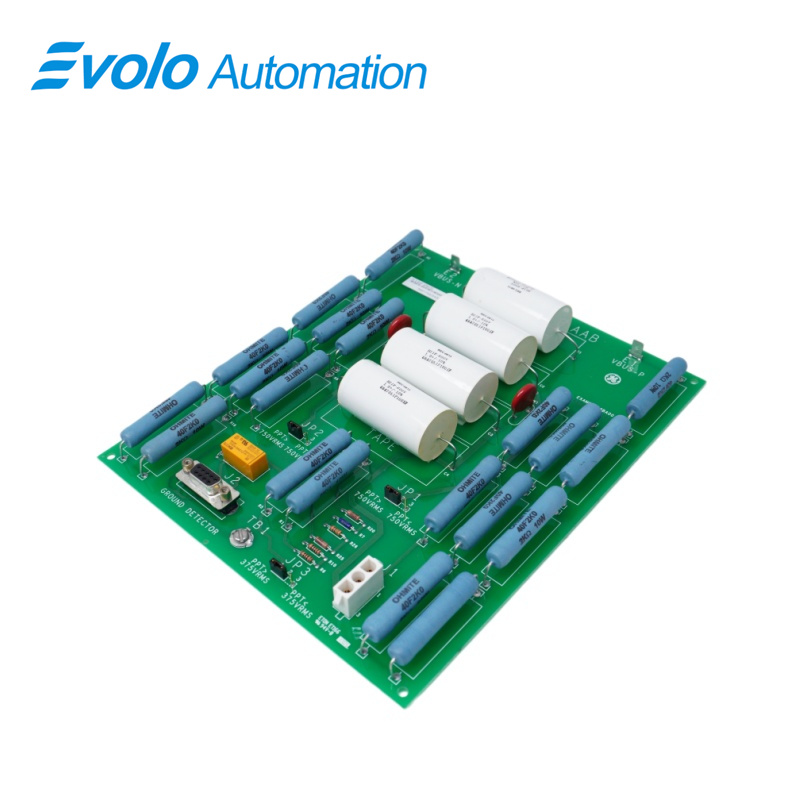
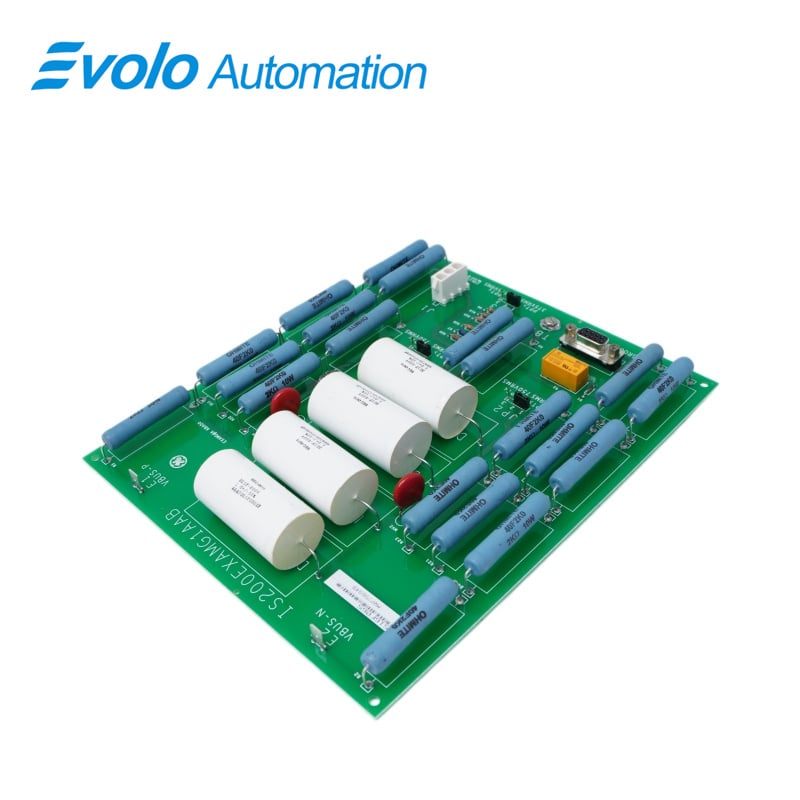
IS200EXAMG1AAB is an Exciter Attenuation Module manufactured and designed by General Electric and is part of the EX2100 Series used in Excitation turbine control systems. The Exciter Attenuation Module (IS200EXAM or EXAM), when used alongside the Exciter Ground Detector Module (IS200EGDM or EGDM), forms the ground detection system for the EX2100 Excitation Control. The EXAM is installed in the High Voltage Interface (HVI) module within the auxiliary cabinet. It acts by reducing the high voltage from the bridge, converting it to a manageable level, and providing attenuation between the field bus and the EGDM.
The EXAM and EGDM(s) are linked via the Exciter Power Backplane (IS200EPBP or EPBP). A single 9-pin cable connects the EXAM to the EPBP while the EGDMs are connected to the EPBP through a 96-pin P2 connector. Only one EXAM is necessary for both simplex and triple modular redundant (TMR) configurations, with the interconnection remaining the same in both cases. The field voltage (Vbus and Vbus-) varies from 125 V DC to 1000 V DC and the AC line-to-line voltages power potential transformer (PPT) vary from 120 to 1300 V AC RMS. The EXAM has two variations of filter capacitance that are selectable through jumpers JP1 and JP2.
PPT voltages less than 750 V rms
PPTvoltages qreater than 750 V rms
Applications
Power Generation:
Gas Turbine Power Plants: Widely used in GE Frame series gas turbine units (such as Frame 6, 7, and 9). For example, the Tung Haiso Power Plant in Taiwan adopted the EX2100e system in its LM2500XPRESS gas turbine unit upgrade project.
Steam Turbines and Nuclear Power Plants: Used for excitation regulation of large steam turbine generators to ensure grid frequency and voltage stability.
Hydropower Plants: Specifically designed for excitation control and static start-up of hydroelectric generator units.
Oil, Gas & Chemical Industry: These industries typically have their own power plants. The IS200EXAMG1AAB is installed in the control cabinet of these plants to prevent unexpected production line shutdowns due to power fluctuations or generator failure by detecting ground faults in the excitation circuit.
Heavy Manufacturing (Steel Mills and Paper Mills): In factories with high-power synchronous motors, this module is used to maintain excitation stability during the operation of large motors and protect the motor rotor shaft from magnetic field and thermal imbalances caused by grounding paths.
FUNCTIONS
1 The EGDM manages the activation for the field ground test and master selection by controlling a relay on the EXAM. This relay features a 24 V DC coil with diode suppression and operates with less than 20 mA.
2 In its default state, the relay remains de-energized and provides feedback to the M1 section of the TMR control or the sole control in a simplex setup. When energized, the relay sends feedback to the M2 section of the TMR control.
3 In TMR configurations, three EGDMs are set up as Controller (C), Master 1 (M1), and Master 2 (M2). Each EGDM is automatically configured via the program pins of the 96-pin P2 connector on the EPBP.
4 The DSPX board sends information to EGDM C about which master provides the 50 V AC square-wave signal to the sense resistor in the EXAM. EGDM C will activate the relay in the EXAM if M2 is the master, or leave it unpowered if M1 is the master.
5 This signal enables the signal generator on the active master and selects the test command source for each EGDM (M1, M2, and C). The active master then sends a positive or negative 50 V AC square-wave signal to the EXAM, which is applied to one end of the sense resistor (Rx).
FREQUENTLY ASKED QUESTIONS
Q: What is the purpose of the IS200EXAMG1AAB Exciter Attenuation Module (EXAM)?
A: The EXAM provides attenuation between the field bus and the Exciter Ground Detector Module (EGDM) by sensing high voltage from the bridge and scaling it to a usable level. It is part of the ground detection system for the EX2100 Excitation Control.
Q: How does the IS200EXAMG1AAB EXAM interact with the EGDM?
A: The EXAM and EGDM(s) are connected via the Exciter Power Backplane (EPBP). The EXAM helps in providing ground detection by relaying feedback from the ground system and ensuring proper operation of the EX2100 Excitation Control.
Q: What is the role of the relay in the IS200EXAMG1AAB EXAM?
A: The relay on the EXAM is controlled by the EGDM. It helps in activating the field ground test and master selection. The relay operates with a 24 V DC coil, and its default state is de-energized. When energized, it feeds back to the M2 section of the TMR control.