EN




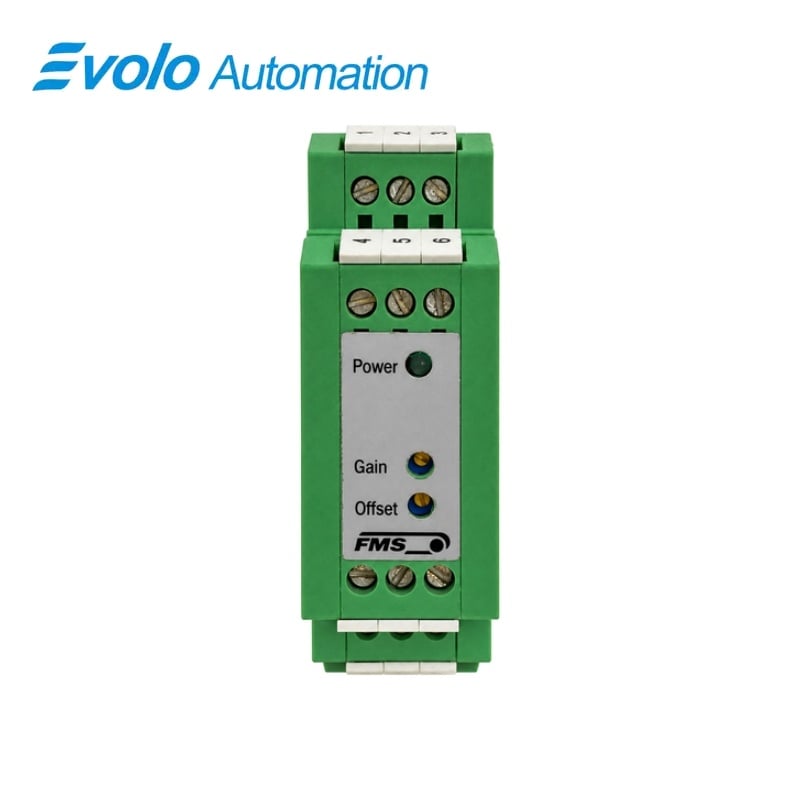
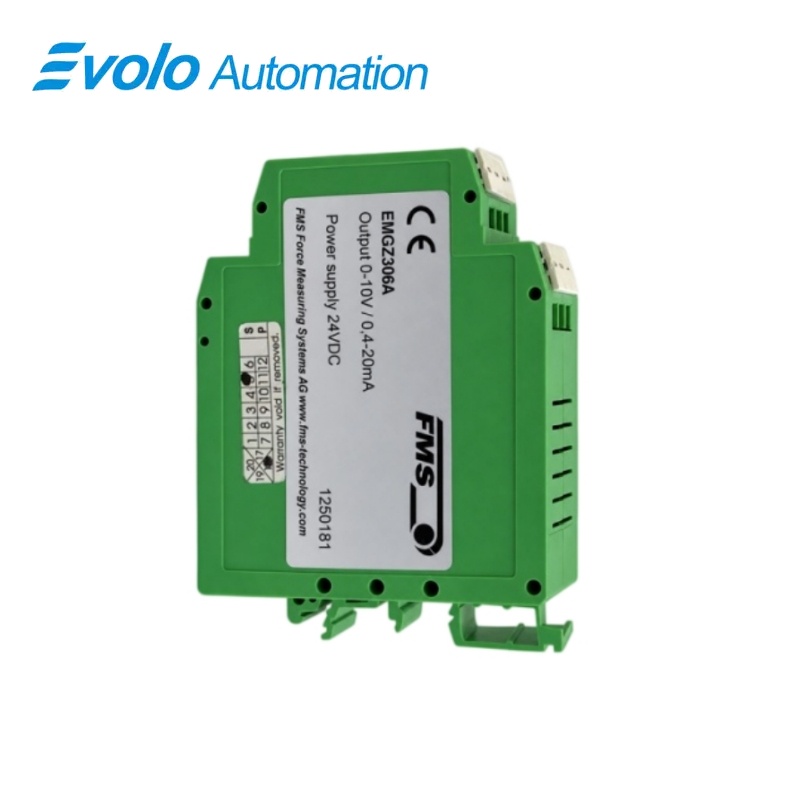
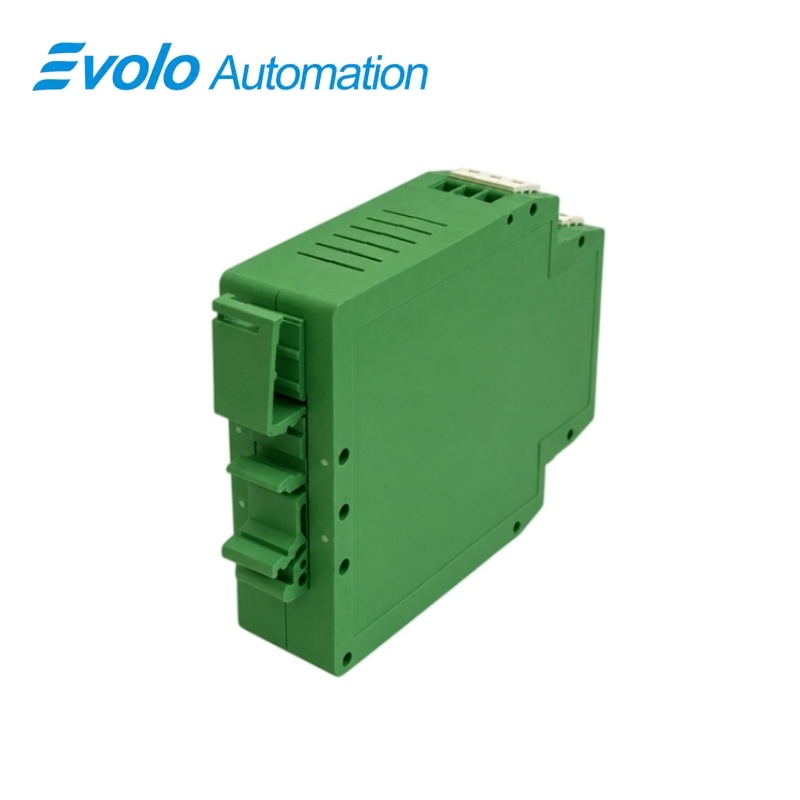
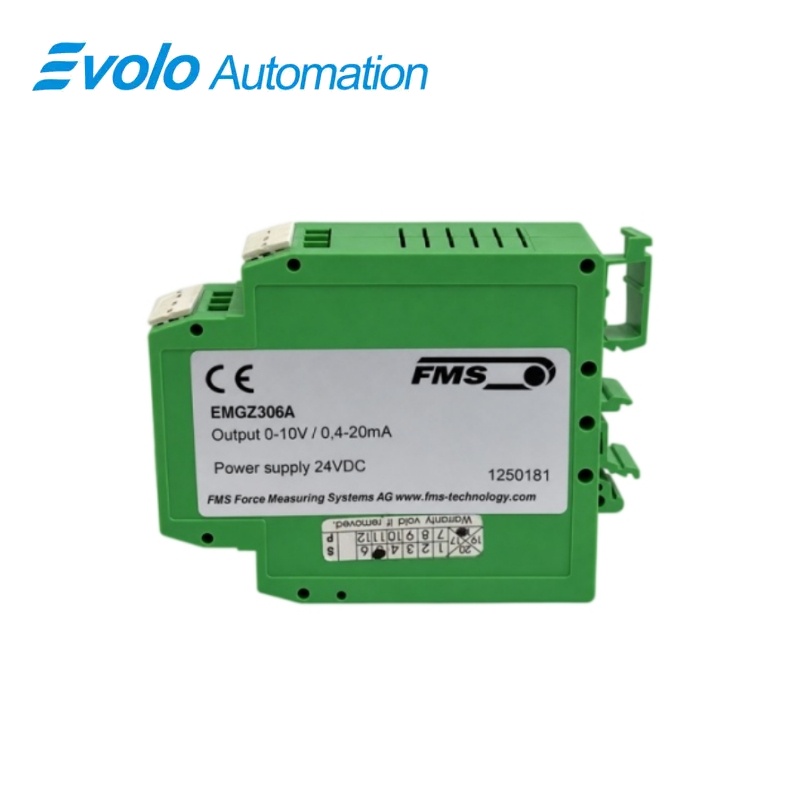
FMS EMGZ306A Compact Analogue Tension Measuring Amplifier
Manufacturer: FMS
Condition: Brand New
Lead Time: In Stock
Origin: Switzerland
Warranty: 12 Months
Email: [email protected]
whatsApp: +86-18150117685
- Overview
- Hot Selling Models
- Recommended Products
Overview
- Use the standard 5 V excitation version unless a different variant is explicitly required.
- Connect two sensors in parallel only for the intended average-value measurement.
- Separate the shielded sensor cable from power wiring.
- Set output jumpers, zero, gain and filtering during commissioning.
- Use reference-weight calibration for the standard amplifier.
EMGZ306A Compact Analogue Tension Measuring Amplifier
A single-channel DIN-rail amplifier for one or two 350 Ω force sensors, with simultaneous voltage and current outputs and adjustable gain, zero and filtering.
At a Glance
| Brand | FMS |
|---|---|
| Model | EMGZ306A |
| Product Type | Analogue measuring amplifier |
| Core Function | Conditioning strain-gauge force signals |
| Application | Web-tension measurement systems |
Bridge sensor connection
One or two 350 Ω force sensors can be connected.
Dual analogue output
Voltage and current outputs remain active simultaneously.
Local adjustment
Trimmers set gain and offset, with capacitor-adjusted low-pass filtering.
Product Overview
EMGZ306A conditions the millivolt signal from FMS force sensors for a tension-measurement system. It provides precision sensor excitation and converts the measured force into standardized voltage and current signals.
Two parallel-connected force sensors produce an average-value measurement. The standard amplifier uses local gain and offset trimmers and supports a non-polarized filter capacitor to reduce unwanted signal variations.
Key Functions
Excite and amplify the force bridge
The precision 5 V sensor supply feeds the bridge while the amplifier gain covers 500–5000.
Feed two receiving circuits
The ±10 V output and the selectable 0–20 mA or 4–20 mA output operate simultaneously.
Tune the measurement response
Offset and gain trimmers set the measurement range, while a filter capacitor sets the low-pass response.
Official Specifications
| Measuring channels | 1 |
|---|---|
| Force-sensor connection | 1 or 2 sensors, 350 Ω each |
| Standard sensor excitation | 5 V DC; 30 mA maximum |
| Gain-factor range | 500–5000 |
| Offset range | ±9 mV |
| Offset temperature drift | Less than 0.01%/K |
| Linearity error | Less than 0.1% |
| Voltage output | ±10 V; load at least 1 kΩ |
| Current output | 0/4–20 mA; load at most 500 Ω |
| Adjustable low-pass cutoff | Approximately 1–1000 Hz |
| Power supply | 24 V DC nominal; 18–36 V DC range |
| Maximum supply current | 0.1 A |
| Maximum power consumption | 2.5 W |
| Operating temperature | −10 to +60 °C |
| Ingress protection | IP20 |
| Electrical connections | Screw terminals |
Frequently Asked Questions
Can I connect two force sensors to EMGZ306A?
Two 350 Ω sensors can be connected in parallel and the amplifier output then represents their average value.
Can EMGZ306A drive a voltage receiver and a current receiver at the same time?
The voltage and current outputs operate simultaneously.
Which jumper setting selects a 0–20 mA output on EMGZ306A?
Set the current-output jumpers to X3 and X4.
What loads can I connect to the analogue outputs of EMGZ306A?
The voltage-output load must be at least 1 kΩ and the current-output load must not exceed 500 Ω.
How can I reduce signal ripple from roller imbalance when using EMGZ306A?
Connect the specified non-polarized filter capacitor to adjust the low-pass cutoff and reduce unwanted signal variations.
What sensor cable should I use with EMGZ306A?
Use shielded twisted-pair 2 × 2 × 0.75 mm² cable, with 2 × 2 × 0.25 mm² also suitable for runs below 15 m.
Does the standard EMGZ306A have the weightless calibration button?
The weightless-calibration button belongs to the separate CAL variant.