EN




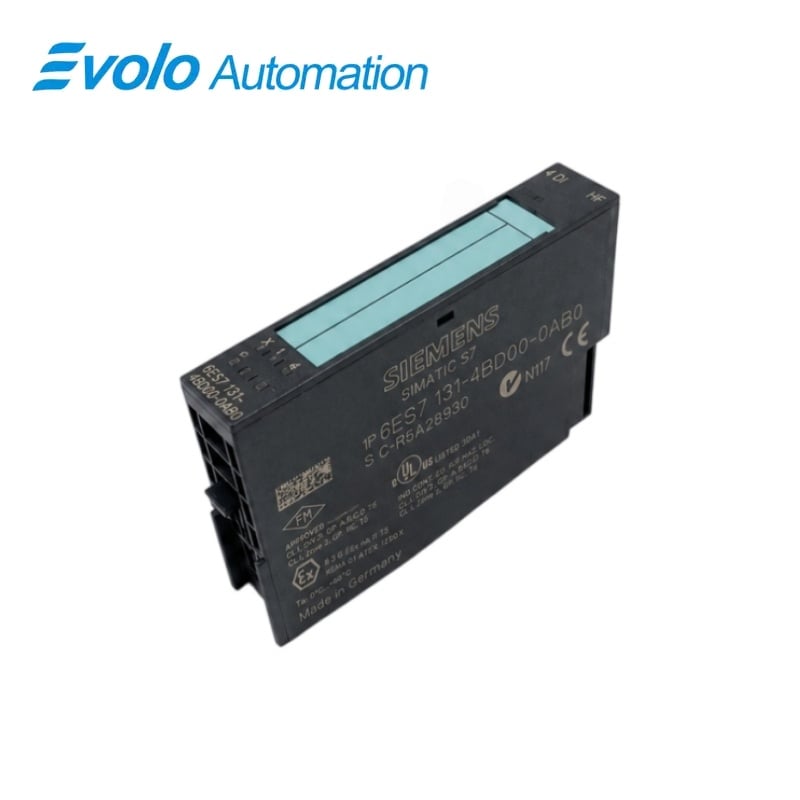
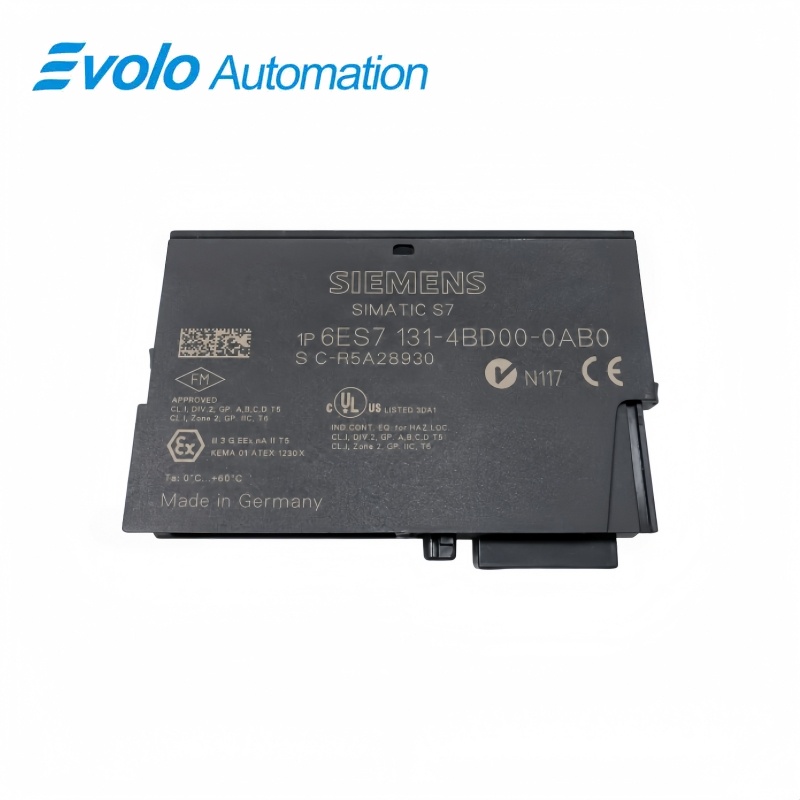
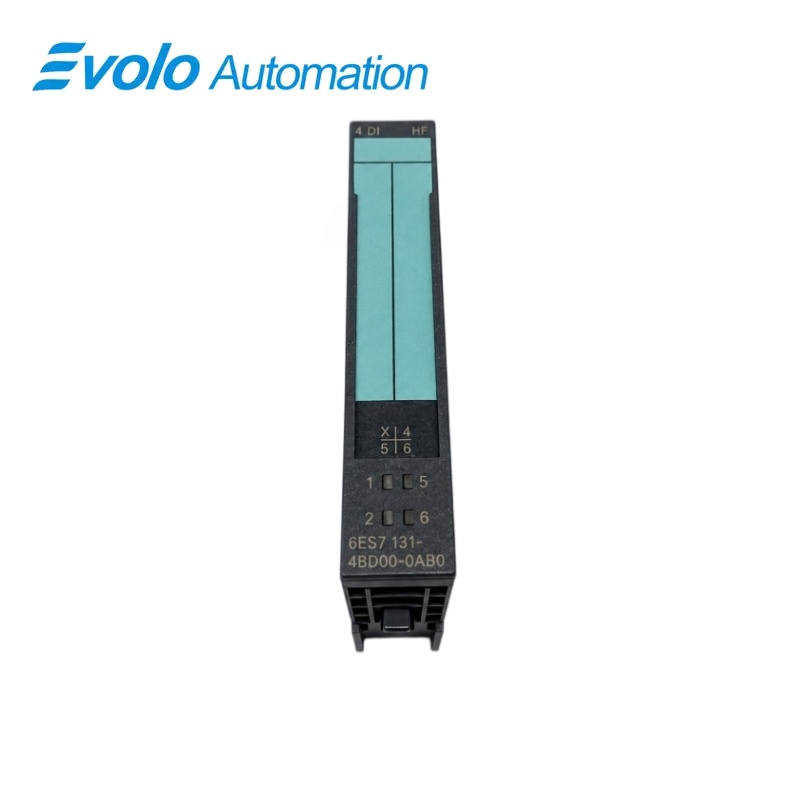
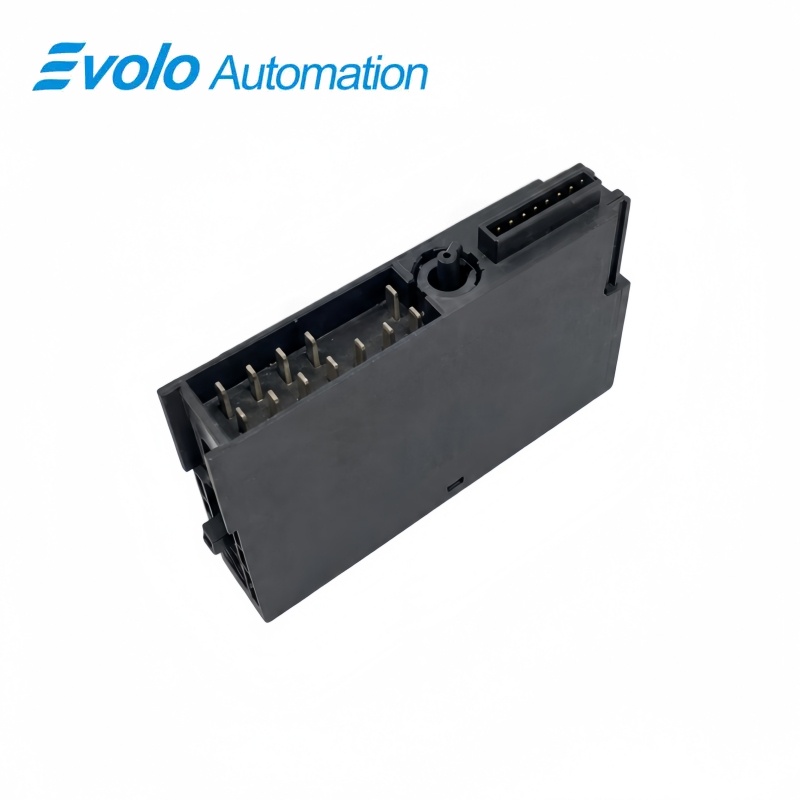
Siemens 6ES7131-4BD00-0AB0 SIMATIC ET 200S 4DI DC24V High Feature Input Module
Manufacturer: Siemens
Condition: Brand New
Lead Time: In Stock
Origin: Germany
Warranty: 12 Months
Email: [email protected]
whatsApp: +86-18150117685
- Overview
- Hot Selling Models
- Recommended Products
Overview
- Keep the 24 V DC module supply.
- Configure input filtering and process interrupts to the application.
- Observe the 500 mA sensor-supply limit.
- Retain the station’s terminal-base and AUX1 assignment.
6ES7131-4BD00-0AB0 SIMATIC ET 200S 4DI DC24V High Feature Input Module
A four-channel 24 V DC High Feature input module with configurable input filtering, hardware interrupts and a protected sensor supply.
At a Glance
| Brand | Siemens |
|---|---|
| Model | 6ES7131-4BD00-0AB0 |
| Product Type | Digital input module |
| Core Function | Acquiring discrete sensor states |
| Application | ET 200S high-feature input stations |
Selectable filtering
Nominal input delays of 0.1, 0.5, 3 or 15 ms suit different signal behavior.
Interrupt-capable inputs
Process interrupts can be configured for the application.
Protected sensor supply
The module provides an electronically protected 500 mA sensor supply.
Product Overview
6ES7131-4BD00-0AB0 acquires four 24 V DC field signals from switches and compatible proximity sensors.
Its High Feature functions add configurable filtering and hardware-interrupt handling, with clock-synchronized operation available in the appropriate station configuration.
Key Functions
Adapt to sensor switching speed
The configurable input delay includes a 0.1 ms setting as well as 0.5, 3 and 15 ms settings.
Report time-sensitive input events
Configurable process interrupts let the application respond to selected input events.
Supply the field sensors
The sensor power supply provides up to 500 mA with electronic short-circuit protection for the module.
Official Specifications
| Input channel count | 4 |
|---|---|
| Rated module and input supply | 24 V DC |
| ON-state input voltage | 11–30 V |
| OFF-state input voltage | −30 to +5 V |
| Typical ON-state input current | 8 mA |
| Nominal configurable input delays, both edges | 0.1, 0.5, 3 or 15 ms |
| Input characteristic | IEC 61131 type 1 |
| Maximum two-wire sensor quiescent current | 1.5 mA |
| Maximum signal-cable length | 600 m unshielded; 1,000 m shielded |
| Sensor supply output | 500 mA rated; at least L+ minus 0.5 V under load |
| Sensor supply short-circuit protection | Electronic, per module |
| Typical module power loss | 0.7 W |
| Isolation arrangement | Inputs isolated from backplane bus; no channel-to-channel isolation |
| Permissible inter-circuit potential difference | 75 V DC or 60 V AC |
| Isolation test voltage | 500 V DC |
| Status and fault indicators | Green LED per channel; red SF group-error LED |
| Interrupt provision | Configurable process interrupt |
| Dimensions (W × H × D) | 15 × 81 × 52 mm |
| Approximate module weight | 35 g |
Frequently Asked Questions
How can I capture a short sensor pulse with 6ES7131-4BD00-0AB0?
Select the 0.1 ms input-delay setting when the signal and station configuration require the shortest available filtering time.
Can 6ES7131-4BD00-0AB0 generate a process interrupt for input events?
Yes, process interrupts are configurable for this High Feature module.
What happens to the sensor supply during a short circuit on 6ES7131-4BD00-0AB0?
Electronic short-circuit protection acts on the sensor supply for the module.
Can I use a two-wire proximity sensor drawing 2 mA while OFF with 6ES7131-4BD00-0AB0?
No, the permitted two-wire sensor quiescent current is limited to 1.5 mA.
Are the four input circuits on 6ES7131-4BD00-0AB0 electrically isolated from one another?
No, the channels share their electrical potential although they are isolated from the backplane bus.
Can an 11 V sensor output be recognized as ON by 6ES7131-4BD00-0AB0?
Yes, the ON-state input-voltage range starts at 11 V.
Which ET 200S wiring arrangement should I preserve when replacing 6ES7131-4BD00-0AB0?
Preserve the terminal assignment of the installed terminal-base variant because the supported bases distribute sensor supply and AUX1 differently.