EN




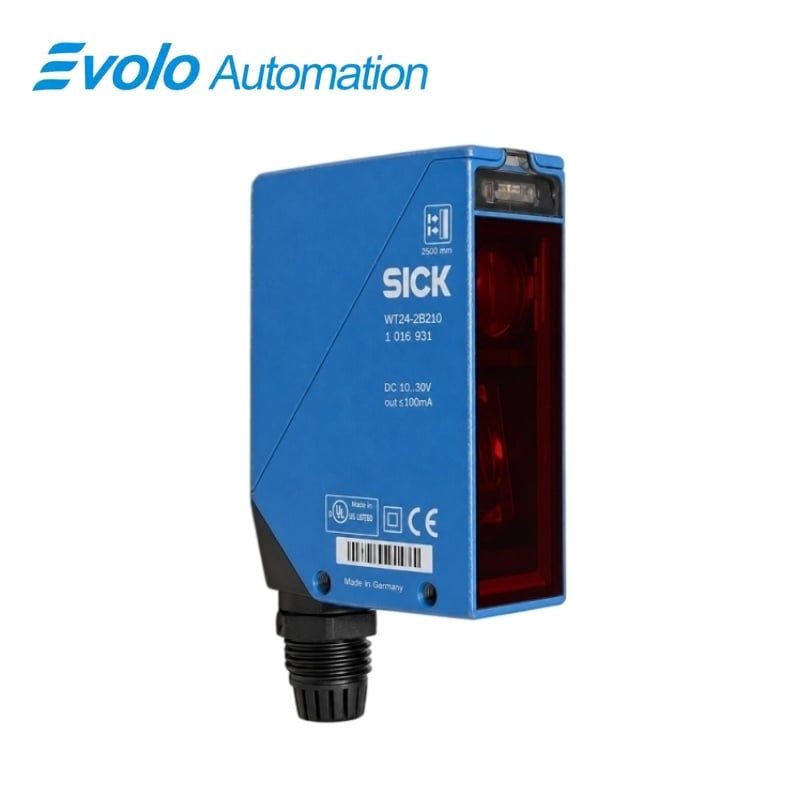
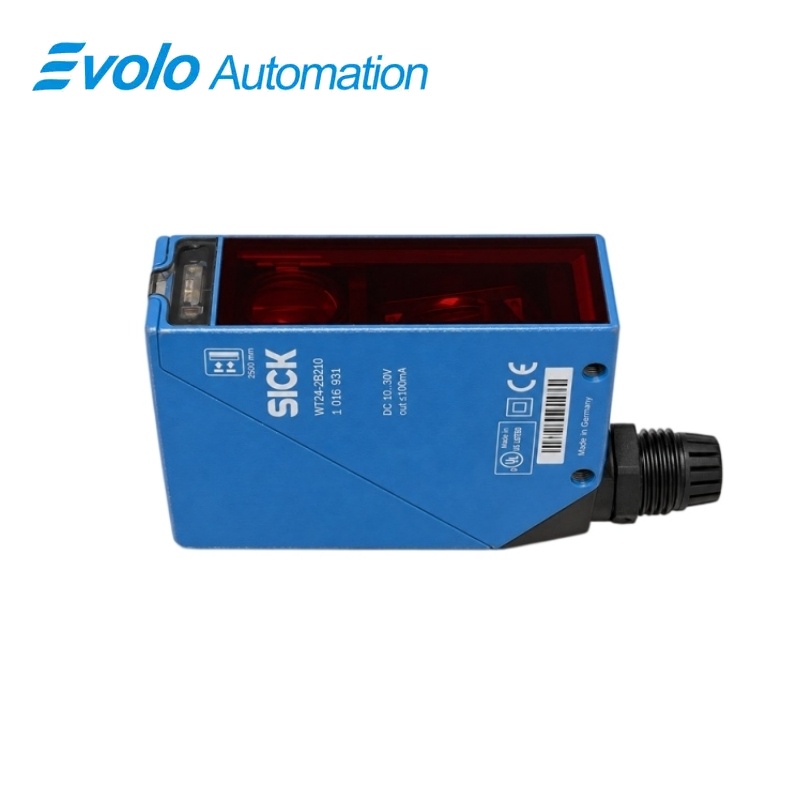
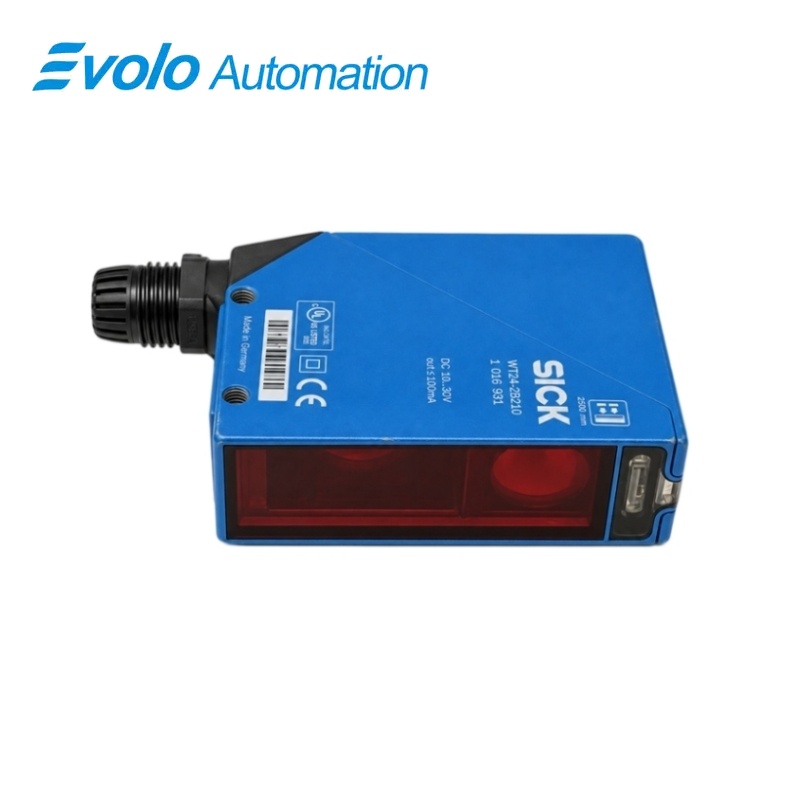
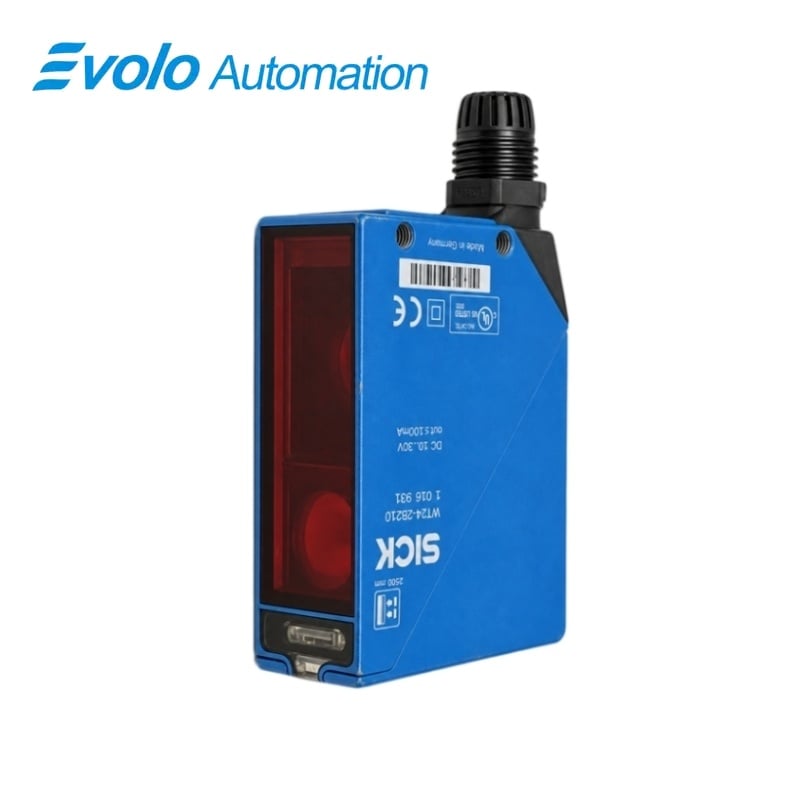
SICK WT24-2B210 W24 Background Suppression Photoelectric Sensor
Manufacturer: SICK
Condition: Brand New
Lead Time: In Stock
Origin: Germany
Warranty: 12 Months
Email: [email protected]
whatsApp: +86-18150117685
- Overview
- Hot Selling Models
- Recommended Products
Overview
- Select the correct NPN/PNP and light/dark settings before testing the controller input.
- Set the distance using the actual object and background rather than assuming the white-target maximum applies to all materials.
- Keep the output load within 100 mA and the supply within 10–30 V DC.
- Use the M16 cable entry and suitable sealing to maintain the installed enclosure protection.
WT24-2B210 W24 Background Suppression Photoelectric Sensor
Infrared W24 sensor with adjustable 100–2,500 mm sensing range, selectable NPN/PNP outputs and a metal IP67 housing.
At a Glance
| Brand | SICK |
|---|---|
| Model | WT24-2B210 |
| Product Type | Photoelectric proximity sensor |
| Core Function | Object detection with background suppression |
| Application | Industrial non-contact object sensing |
Adjustable detection distance
The potentiometer sets the sensing distance within the specified 100–2,500 mm range for a 90% remission white target.
Configurable switching
Output selection supports NPN or PNP operation together with light or dark switching.
Robust field installation
A zinc die-cast housing, M16 terminal entry and IP67 enclosure support industrial mounting.
Product Overview
WT24-2B210 detects objects using infrared light with background suppression, allowing the detection distance to be adjusted by potentiometer for the installation.
Selectable output polarity and light/dark switching adapt the sensor to the control input, while the specified sensing distance must be assessed against the actual target reflectivity.
Key Functions
Adjustable detection distance
The potentiometer sets the sensing distance within the specified 100–2,500 mm range for a 90% remission white target.
Configurable switching
Output selection supports NPN or PNP operation together with light or dark switching.
Robust field installation
A zinc die-cast housing, M16 terminal entry and IP67 enclosure support industrial mounting.
Official Specifications
| Sensing range | 100–2,500 mm with a 90% remission white target |
|---|---|
| Light source | Infrared LED |
| Light spot diameter | 80 mm at a distance of 2,500 mm |
| Distance adjustment | Potentiometer |
| Supply voltage | 10–30 V DC |
| Permitted ripple | Less than 5 V peak-to-peak, within supply-voltage tolerances |
| No-load current consumption | 50 mA |
| Switching output selection | NPN or PNP; light or dark switching |
| Maximum output current | 100 mA |
| Response time | Maximum 500 µs with a resistive load |
| Switching frequency | 1,000 Hz at a 1:1 light/dark ratio |
| Electrical connection | Terminal connection with M16 gland |
| Test input | Sender disabled by connecting TE to 0 V |
| Circuit protection | Supply reverse-polarity protection, interference suppression and output overcurrent/short-circuit protection |
| Housing and optics materials | Zinc die-cast metal housing; PMMA optics |
| Protection rating and class | IP67; protection class II |
| Operating temperature | −40 to +60 °C |
| Storage temperature | −40 to +75 °C |
| Dimensions (W × H × D) | 27 × 87.5 × 65 mm |
| Weight | 330 g |
Frequently Asked Questions
Does the 2.5 m range of WT24-2B210 apply to every object color?
The 2.5 m specification uses a 90% remission white target, so darker targets require assessment against the sensing-range curves.
Can WT24-2B210 connect to either a PNP or NPN controller input?
The switching output can be selected for PNP or NPN operation.
How is the detection distance adjusted on WT24-2B210?
Set the sensing distance with the potentiometer.
Can the emitter of WT24-2B210 be disabled for a test?
Connecting the TE test input to 0 V switches the sender off.
What load limit applies to the output of WT24-2B210?
Keep the output current at or below 100 mA.
Which cable entry is provided on WT24-2B210?
The sensor uses a terminal connection through an M16 gland.
How quickly can WT24-2B210 respond to a resistive-load signal change?
The specified maximum response time with a resistive load is 500 µs.