EN




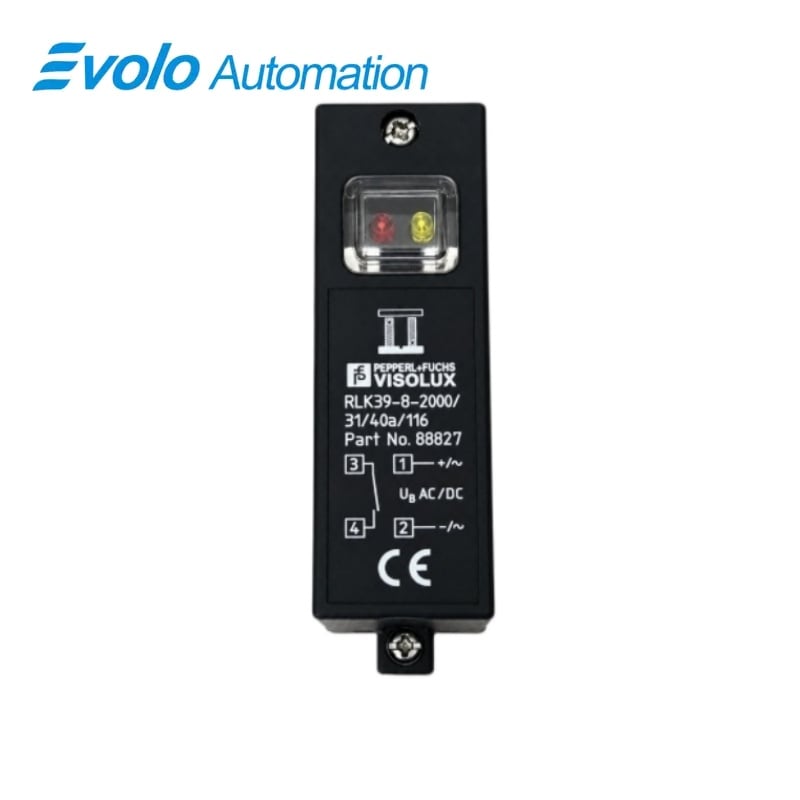



Pepperl+Fuchs RLK39-8-2000 Infrared Diffuse-Mode Photoelectric Sensor
Manufacturer: Pepperl+Fuchs
Condition: Brand New
Lead Time: In Stock
Origin: Vietnam
Warranty: 12 Months
Email: [email protected]
whatsApp: +86-18150117685
- Overview
- Hot Selling Models
- Recommended Products
Overview
- Set the sensing range with the actual object color, size and background.
- Choose light-on or dark-on behavior for the application.
- Keep relay voltage, current and switching power within all applicable limits.
- Use the PG9 terminal compartment with the specified conductor size and cable preparation.
- Close the terminal compartment to maintain the specified protection arrangement.
- Select the timer-equipped -Z ordering variant when a timer function is required.
RLK39-8-2000 Infrared Diffuse-Mode Photoelectric Sensor
An infrared diffuse sensor with an adjustable sensing range up to 2000 mm, a relay output, light-on/dark-on selection and separate switching and pre-fault indicators.
At a Glance
| Brand | Pepperl+Fuchs |
|---|---|
| Model | RLK39-8-2000 |
| Product Type | Diffuse-mode photoelectric sensor |
| Core Function | Detecting objects using reflected light |
| Application | Industrial object-detection applications |
Adjustable object detection
The sensing-range control adjusts the operating range from 200 to 2000 mm.
Relay switching
The output provides a relay contact with selectable light-on or dark-on behavior.
Optical status feedback
Yellow indicates switching state; red provides pre-fault indication.
Product Overview
RLK39-8-2000 detects objects from the infrared light returned to the receiver within the same housing.
Object color and size influence the achievable sensing distance, so the range adjuster and switching indicators help establish the detection point for the actual target.
Key Functions
Set the sensing range for the target
The infrared sensing arrangement offers a 0–2000 mm detection range with a 200–2000 mm adjustment range referenced to the standard white target.
Select light-on or dark-on operation
The changeover control selects the relay switching behavior for the detected-light condition.
Maintain the optical operating reserve
The red pre-fault indication identifies reduced optical reserve caused by conditions such as contamination or misalignment.
Official Specifications
| Detection Range | 0–2000 mm |
|---|---|
| Adjustment Range | 200–2000 mm |
| Reference Target | Standard white target, 200 × 200 mm |
| Optical Source | IRED with modulated infrared light |
| Ambient-Light Limit | 10000 lux to IEC/EN 60947-5-2 |
| Operating Supply | 12–240 V DC or 24–240 V AC at 50–60 Hz |
| Permissible Supply Ripple | 10% |
| Signal Output | 1 relay output; selectable light-on/dark-on |
| Maximum Switching Voltage | 240 V AC or 150 V DC |
| Maximum Switching Current | 3 A |
| Maximum Switching Power | 90 W DC or 750 VA AC |
| Maximum Switching Frequency | 25 Hz |
| Maximum Response Time | 20 ms |
| Ambient Temperature | Operation: −25 to +55 °C; storage: −40 to +70 °C |
| Degree of Protection | IP54 |
| Field Connection | PG9 terminal compartment; conductors up to 0.75 mm² |
| Housing and Optical-Face Materials | PBT housing; PMMA optical face |
| Dimensions and Approximate Mass | 25 × 64 × 75 mm; 110 g |
Frequently Asked Questions
Will RLK39-8-2000 always detect a dark target at the full 2000 mm range?
Dark or very small objects reduce the available sensing range compared with the standard white reference target.
Can I change RLK39-8-2000 between light-on and dark-on switching?
The sensor provides a changeover control for light-on or dark-on operation.
What does the red indicator on RLK39-8-2000 mean?
The red LED indicates a pre-fault condition when the optical reception falls below the available functional reserve.
Which terminals carry the relay contact on RLK39-8-2000?
Terminal 3 is the normally open contact and terminal 4 is the relay common.
Which power-supply ranges can operate RLK39-8-2000?
The sensor accepts 12 to 240 V DC or 24 to 240 V AC at 50 to 60 Hz.
How should I mount RLK39-8-2000 without distorting its housing?
Use the through-holes or supplied mounting aid on a level surface and secure the fittings against loosening.
What should I clean if RLK39-8-2000 loses detection reserve?
Clean the optical interfaces regularly and check the sensor alignment, mounting fittings and electrical connections.