EN
EN




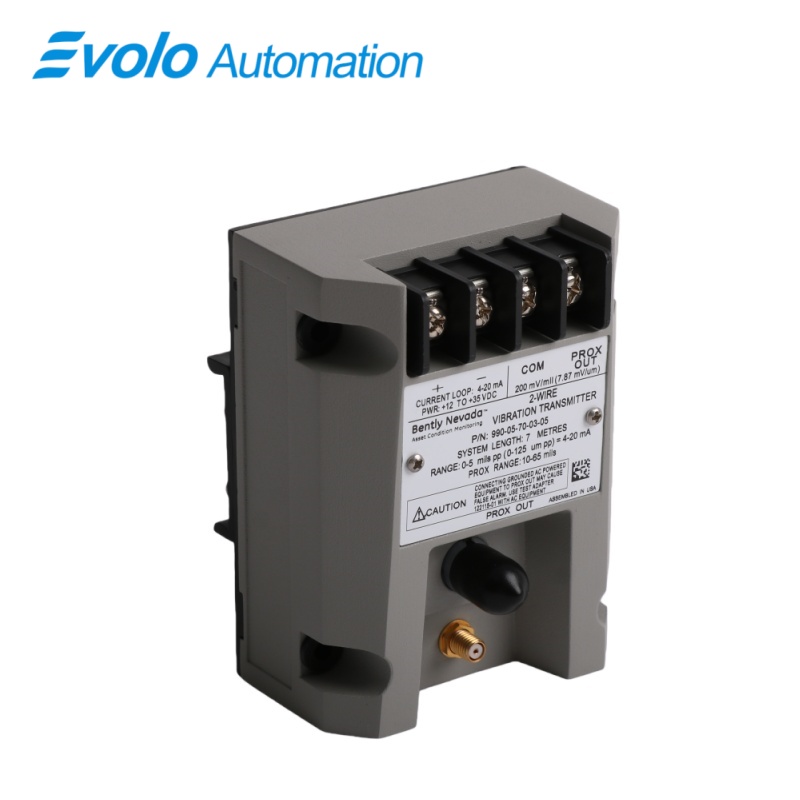
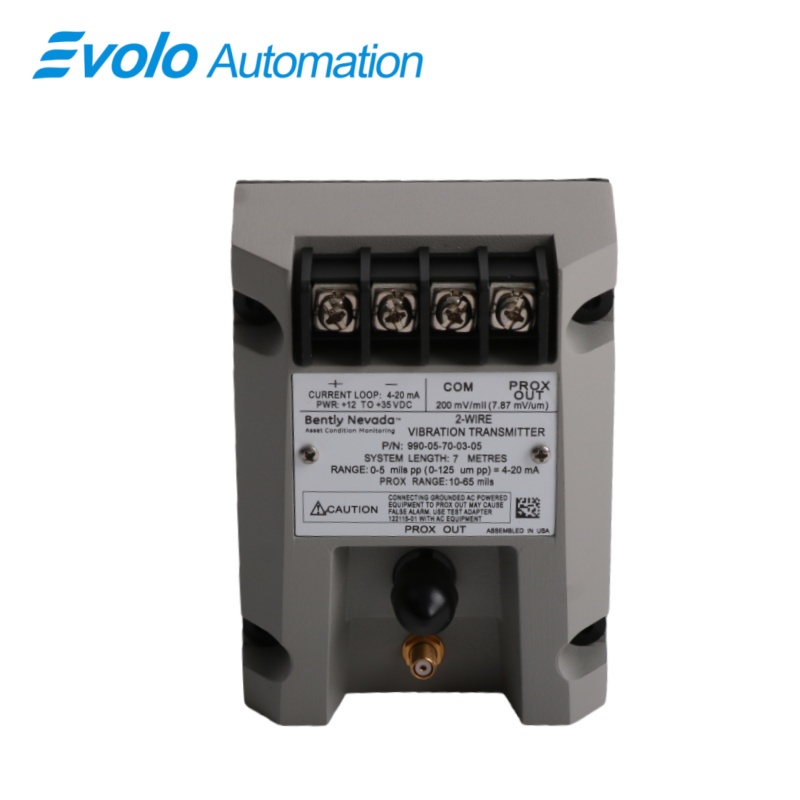
- Overview
- Quick Detail
- Description
- Applications
- Specifications
- Competitive Advantage
- Recommended Products
Overview
Place of Origin: |
USA |
Brand Name: |
Bently Nevada |
Model Number: |
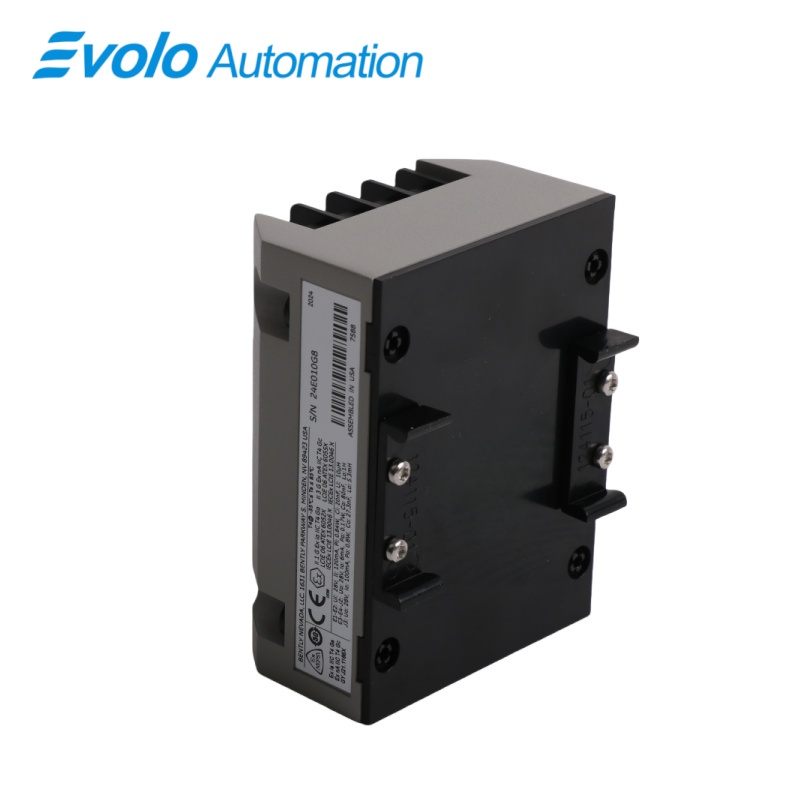
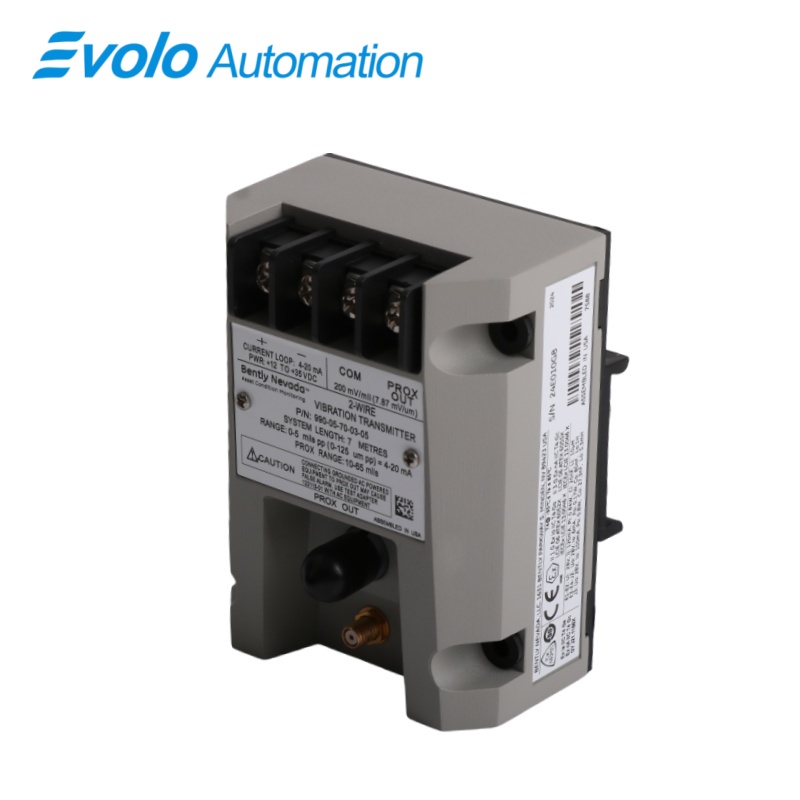
990-05-70-03-05 |
Minimum Order Quantity: |
1 |
Packaging Details: |
Original new Factory Sealed |
Delivery Time: |
5-7 days |
Payment Terms: |
T/T |
Supply Ability: |
In stock |
Quick Detail
|
Full-scale Option: |
0-5 mils pp (0-125 μm pp) |
|
System Length Option: |
7.0 meters (23.0 feet) |
|
Mounting Option: |
DIN clips and screws |
|
Agency Approval Option: |
CSA Division 2, ATEX Zone 0, ATEX Zone 2 and includes ABS maritime approval |
|
Fittings: |
One 3/4-14 NPT plug only |
|
Dimension: |
9.8x7.3x5.8cm |
|
Weight: |
0.5kg |
Description
The 177230-00-01-05 Seismic Transmitter is a high-performance, loop-powered industrial vibration sensor designed by Bently Nevada to provide critical machinery protection for less critical assets. As a primary member of the Seismic Transmitter family, the 177230-00-01-05 integrates a vibration transducer and signal conditioner into a single, robust package. This Seismic Transmitter is specifically engineered to measure the radial vibration of machine casings or bearing housings, converting the seismic velocity signal into a standard 4-20 mA output. This allows the 177230-00-01-05 Seismic Transmitter to interface directly with Distributed Control Systems (DCS), Programmable Logic Controllers (PLC), or other monitoring platforms without the need for an intermediate Proximitor* or interface module.
Constructed with a hermetically sealed 316L stainless steel housing, the 177230-00-01-05 Seismic Transmitter is designed to thrive in the most punishing industrial environments. This Seismic Transmitter provides a linear measurement range of 0 - 25.4 mm/s (0 - 1.0 in/s) peak, offering precise data for identifying mechanical issues such as imbalance, misalignment, and looseness. The 177230-00-01-05 features a 2-pin MIL-C-5015 connector, ensuring reliable electrical connectivity even in high-vibration scenarios. Furthermore, this Seismic Transmitter is remarkably easy to install, as its loop-powered design reduces wiring complexity and installation costs compared to traditional 4-wire systems.
The 177230-00-01-05 Seismic Transmitter is an essential component for any predictive maintenance strategy. By providing continuous 4-20 mA trending data, this Seismic Transmitter enables operators to detect gradual equipment degradation long before a catastrophic failure occurs. With multiple agency approvals, including ATEX and CSA for hazardous areas, the 177230-00-01-05 is a versatile and reliable solution for monitoring auxiliary pumps, fans, and motors. Choosing the 177230-00-01-05 Seismic Transmitter means investing in a durable, accurate, and industry-standard vibration monitoring tool that simplifies the path from sensor to control room.
Applications
The 177230-00-01-05 Seismic Transmitter is primarily used for the continuous monitoring of general-purpose rotating machinery, such as electric motors, centrifugal pumps, and small fans. In these applications, the transmitter is mounted directly to the bearing housing to measure casing vibration. Its 4-20 mA output allows for seamless integration into existing plant control systems (PLC/DCS), providing a cost-effective way to monitor secondary assets that do not justify the expense of a full rack-based monitoring system.
In the petrochemical and oil and gas industries, this Seismic Transmitter excels in monitoring equipment located in remote or hazardous areas. Thanks to its ATEX Zone 0 and CSA Division 2 certifications, the 177230-00-01-05 can be safely deployed in environments where explosive gases or vapors may be present. Its robust 316L stainless steel casing protects the internal electronics from corrosive mists and saltwater spray, making it ideal for offshore platforms and refinery cooling tower assemblies.
The 177230-00-01-05 is also a critical tool for monitoring auxiliary equipment in power plants, such as boiler feed pumps and air compressors. Its 2-wire loop-powered configuration simplifies the field wiring process over long distances (up to 300 meters), allowing for centralized monitoring of equipment spread across a large facility. By providing reliable velocity data, it supports predictive maintenance programs, helping facilities avoid unplanned downtime and extending the service life of critical support machinery.
Specifications
|
Operating and Storage Temperature: |
-50°C to +75°C (-45°F to +175°F) |
|
Mass (Weight): |
0.38 kg (0.8 lbs) |
|
Output Resistance: |
24 VDC |
|
Linear Range: |
0 - 26.4 mm/s (0 - 1.0 in/s) peak |
|
Field Wiring: |
2-wire (loop powered) |
|
Supply Sensitivity: |
Less than 0.08% per Volt |
Competitive Advantage
1. Simplified "Sensor-to-PLC" Integration
The 177230-00-01-05 significantly reduces system complexity by combining a vibration sensor and signal conditioner into one unit. Unlike traditional seismic sensors that require external modules to convert signals to 4-20 mA, this transmitter connects directly to your control system. This "direct-connect" capability reduces installation labor by up to 50% and eliminates the need for extra space in the control cabinet.
2. Exceptional Durability in Harsh Environments
Encased in 316L stainless steel and featuring a hermetically sealed design, the 177230-00-01-05 offers superior resistance to corrosion, humidity, and mechanical stress. With an operating temperature range of -40°C to +85°C and an IP67-rated connector interface, it maintains high-fidelity signal transmission in conditions that would cause standard industrial sensors to fail. This leads to a much longer service life and a lower total cost of ownership.
3. Comprehensive Global Safety Certifications
Unlike many generic vibration transmitters, the 177230-00-01-05 is backed by Bently Nevada’s rigorous testing and carries prestigious global approvals, including CSA, ATEX, and ABS maritime approval. This makes it a "universal" sensor that can be deployed across different industries and geographical regions—from offshore oil rigs to chemical processing plants—without the need for multiple different sensor models to meet local safety compliance.